Hydrotherapy for Multiple Sclerosis: Aquatic Exercise for MS Symptom Management
Multiple sclerosis (MS) is an autoimmune disease in which the immune system attacks the myelin sheath, the protective covering of nerve fibres in the brain and spinal cord. This disrupts the electrical signals that control movement, sensation, balance, and cognition. Approximately 2.8 million people worldwide live with MS. The disease creates a cruel exercise paradox: physical activity is one of the most effective ways to manage symptoms and slow disability progression, yet the heat sensitivity, fatigue, and balance problems that define MS make land-based exercise difficult and sometimes dangerous. Hydrotherapy resolves this paradox.
Why Water Works for Multiple Sclerosis
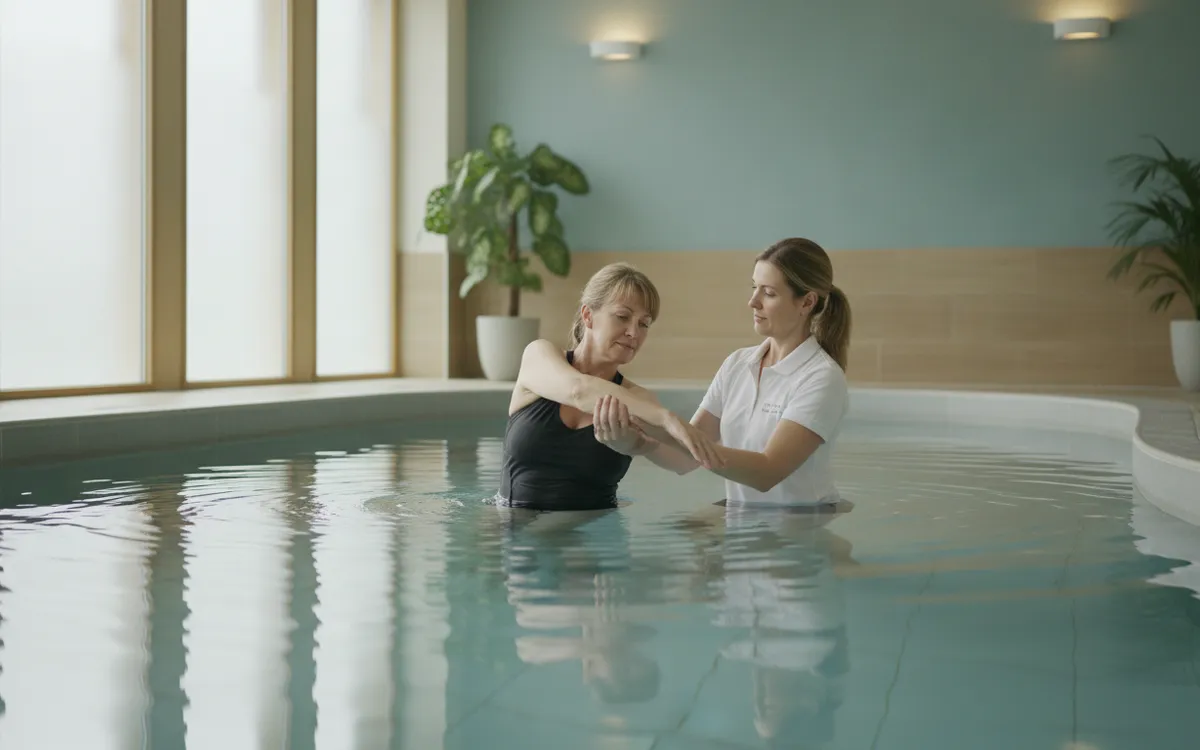
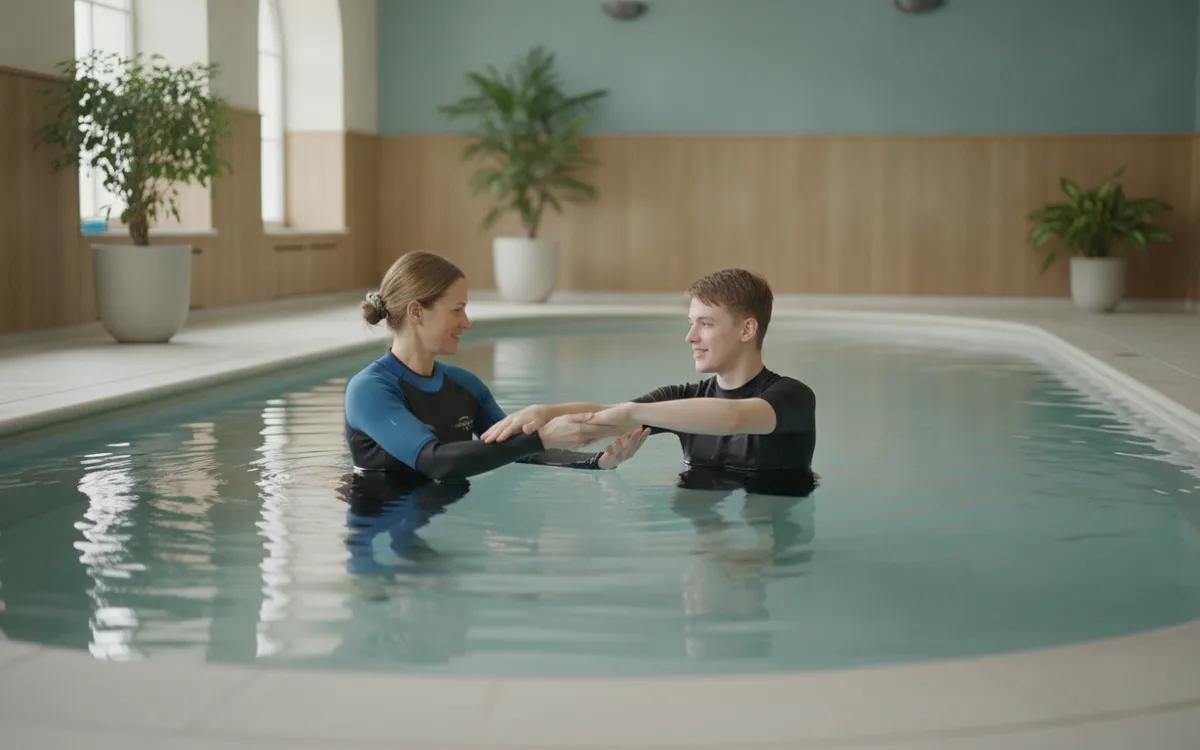
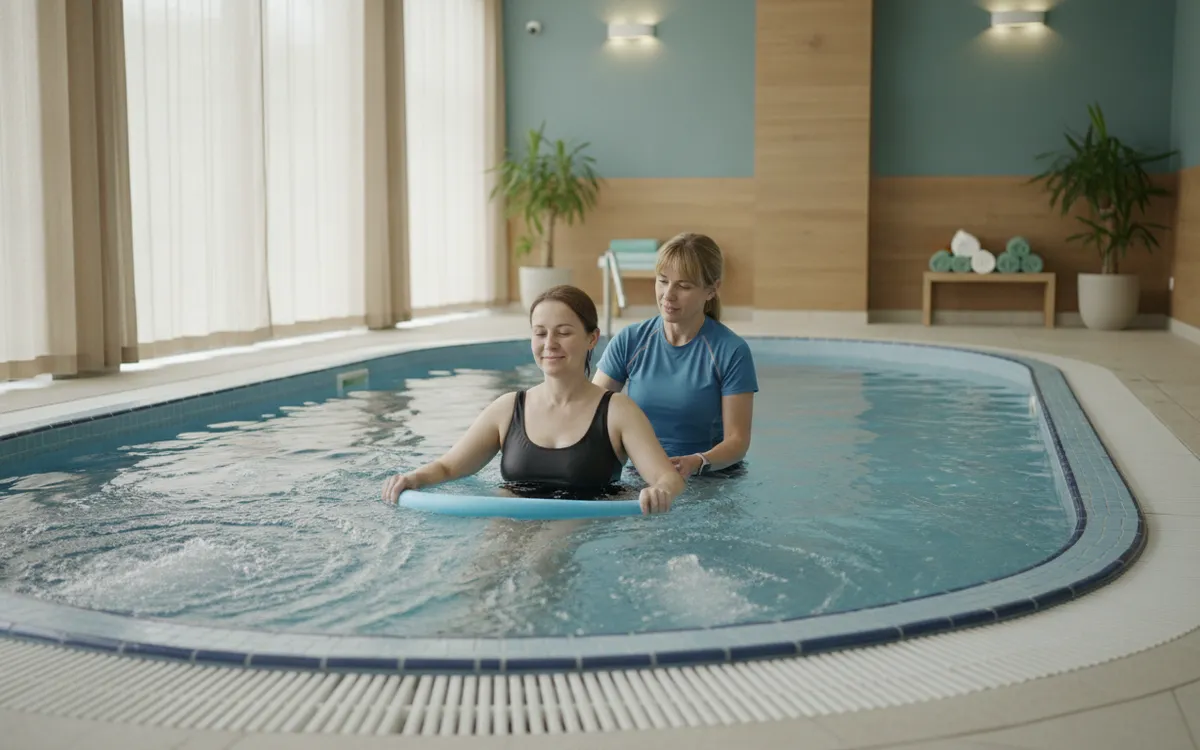
Water provides a uniquely suitable exercise environment for MS because it addresses the specific barriers that prevent people with MS from exercising on land.
- Temperature control (This is the critical factor. Up to 80% of people with MS experience Uhthoff's phenomenon) a temporary worsening of neurological symptoms when body temperature rises. Land-based exercise generates heat that can trigger this response. In thermoneutral or slightly cool water (27-31°C for exercise), the water acts as a heat sink, absorbing body heat and preventing the core temperature rise that triggers symptom worsening. This means people with MS can exercise longer, harder, and with fewer neurological side effects in water than on land.
- Buoyancy support. MS often causes weakness in the legs, making standing and walking difficult. Chest-deep water supports approximately 80% of body weight, allowing people with significant leg weakness to stand, walk, and exercise upright. For many people with MS, the pool is the only place where independent walking is possible.
- Fall safety. Balance impairment and falls are a major concern in MS. Water provides a safe environment for balance training, if you lose your balance, the water catches you. This allows people to challenge their balance systems without fear of injury, which is essential for maintaining and improving balance function.
- Spasticity management. Spasticity affects up to 80% of people with MS. While very warm water is typically used for spasticity in other conditions, people with MS benefit from slightly cooler water (28-32°C) that reduces spasticity through hydrostatic pressure and gentle movement without triggering heat sensitivity.
- Fatigue management (MS fatigue is different from normal tiredness) it is a primary neurological symptom. Water buoyancy reduces the energy cost of movement, meaning people can achieve more exercise volume before hitting their fatigue threshold. The exercise itself then helps reduce fatigue severity over time.
- Reduced pain. Hydrostatic pressure and the sensory input from water help modulate pain signals. Neuropathic pain, a common MS symptom, often improves during and after water immersion.
- Sensory input: The constant pressure of water on the skin provides proprioceptive feedback. This helps compensate for the impaired sensation that is common in MS.
What the Research Shows
Aquatic exercise for MS has a strong and growing evidence base.
A landmark systematic review and meta-analysis published in Multiple Sclerosis and Related Disorders examined the effects of aquatic exercise programmes on people with MS. The analysis found significant improvements in fatigue, walking speed, balance, muscle strength, and quality of life. Importantly, aquatic exercise was well-tolerated with no reported relapses triggered by the intervention, addressing one of the key safety concerns for people with MS [1].
A randomised controlled trial by Salem et al. published in the Journal of Neurologic Physical Therapy compared aquatic exercise to land-based exercise in people with MS over 8 weeks. Both groups improved, but the aquatic group showed significantly greater improvements in walking endurance and reported less exercise-related fatigue and fewer instances of symptom worsening during sessions [2].
A 2014 review in the North American Journal of Medical Sciences confirmed that hydrotherapy produces measurable effects on the nervous system, musculoskeletal system, and cardiovascular system, all relevant to MS symptom management [3].
The 2023 meta-analysis of 32 randomised controlled trials in the Journal of Orthopaedic Surgery and Research involving over 2,200 participants with chronic musculoskeletal conditions further supports the safety and efficacy of aquatic exercise for people with movement limitations [4].
Critically, research has established that exercising in water at 27-31°C does not trigger Uhthoff's phenomenon or increase relapse risk in people with MS. This was a longstanding concern that kept many neurologists from recommending pool exercise, but the evidence now clearly supports aquatic therapy as safe when water temperature is appropriately managed.
Water Temperature for MS: Getting It Right
Water temperature is the single most important variable for MS hydrotherapy. Getting it wrong can worsen symptoms. Getting it right unlocks a powerful therapy.
- Exercise water temperature: 27-31°C (80-88°F). This is cooler than a typical therapy pool (which runs 33-36°C for other conditions). The water must be warm enough to be comfortable but cool enough to absorb the metabolic heat generated during exercise without raising core body temperature.
- Relaxation and gentle stretching: 31-33°C (88-91°F). Slightly warmer water is acceptable for low-intensity activities where minimal metabolic heat is generated.
- Avoid: Above 33°C (91°F). Standard therapy pool temperatures can trigger Uhthoff's phenomenon in many people with MS. If your only pool option is warm, keep sessions short (15-20 minutes), exercise at low intensity, and cool down with a cool shower immediately after.
Individual tolerance varies. Some people with MS tolerate warmer water well; others are extremely heat-sensitive. Start on the cooler end and adjust based on your body's response. As a rough guide, 27 to 29°C suits people with significant heat sensitivity, and 29 to 31°C suits people with mild heat sensitivity. Water below 26°C (79°F) is too cold for most people with MS. It can cause shivering and muscle stiffness.
Practical tip: If your local therapy pool is warmer than 31°C, keep sessions shorter (20 to 30 minutes instead of 45 to 60) and include frequent rest breaks. Stand still in the water during each break to let your body cool. Exit the pool immediately if you notice any temporary worsening of symptoms. Some therapy facilities offer specific "cool pool" sessions for people with MS, so ask before you book.
Hydrotherapy Exercises for Multiple Sclerosis
These exercises are designed for a pool at 27-31°C. Adapt the programme based on your current ability level, fatigue status, and any specific symptoms that are active. The general principle for MS is: do less than you think you can, recover well, and build gradually.
Warm-Up (5-10 minutes)
- Water walking. Walk slowly forward and backward in chest-deep water. Focus on heel strike, controlled step length, and upright posture. The water resistance naturally slows the gait cycle, giving your nervous system more time to coordinate each step. 5 minutes.
- Side stepping. Walk sideways in both directions. This challenges the hip abductors and adductors, which are commonly weak in MS and contribute to balance problems. 2 minutes each direction.
- Arm circles. Slowly circle your arms forward and backward at the water surface. Warms up the upper body and provides gentle cardiovascular preparation. 1-2 minutes.
- Ankle circles: Hold the pool edge and rotate each ankle 10 times in each direction. 1 to 2 minutes.
Balance Training
- Single-leg stance. Stand on one leg in chest-deep water, holding the pool wall for safety if needed. Water provides sensory feedback and cushioning that makes balance training safer. Hold 15-30 seconds, 3 repetitions each leg. Progress by letting go of the wall, closing your eyes, or adding arm movements.
- Tandem walking. Walk heel-to-toe along the pool wall (using it for safety). This challenges your balance in the anterior-posterior plane. 10 steps forward, 10 steps back.
- Perturbation training. Stand in chest-deep water while a therapist or partner creates waves by moving through the water nearby. Resist the water turbulence while maintaining your standing position. This trains reactive balance (the ability to recover from unexpected challenges) which is critical for fall prevention in MS.
- Directional reaching. Stand on both feet and reach forward, sideways, and behind you, shifting your weight to the limit of your stability. Water provides a safe environment to explore your balance boundaries. 5 reaches in each direction.
- Tandem stance: Stand heel-to-toe in waist-deep water and hold for 15 to 30 seconds. 3 holds per stance, then swap the front foot.
- Weight shifts: Shift your weight slowly from the left foot to the right foot. Pause at each side before you shift back. 10 per side. This trains the weight transfer you need for every step.
Gait Training
- Forward walking: Walk the length of the pool with attention to heel strike, knee extension, and arm swing. 4 pool lengths.
- Backward walking: Walking in reverse challenges your balance and works different muscle patterns. 2 pool lengths.
- High-knee walking: Exaggerate the knee lift with each step. 2 pool lengths.
- Obstacle course: Step over floating objects or between cones placed on the pool floor. 2 pool lengths.
Strengthening
- Water squats. Feet shoulder-width apart, squat until thighs are parallel to the pool floor. Buoyancy assists the descent and challenges the ascent. Focus on symmetrical weight distribution. 3 sets of 10.
- Leg lifts (all directions). Stand near the wall. Lift one leg forward, sideways, and backward against water resistance. 10 repetitions each direction, each leg. Strengthens the hip muscles that control walking and balance.
- Arm resistance exercises. Push and pull your arms through the water using paddles or webbed gloves for increased resistance. Focus on both arms equally, even if one side is weaker. 3 sets of 12 in each direction (forward/back, up/down, across body).
- Heel raises. Rise up on your toes, hold 3 seconds, lower slowly. 3 sets of 10. Strengthens the calf muscles and ankle stabilisers. Use the wall for balance support as needed.
Cardiovascular Conditioning
- Aqua jogging. Use a buoyancy belt in deep water. Jog at a moderate pace for 5-15 minutes (depending on fatigue tolerance). Deep-water running provides cardiovascular training with zero impact and effective heat dissipation through the surrounding water. This is often the single most effective exercise for improving MS-related fatigue over time.
- Interval walking. Alternate between fast walking and slow walking in the pool. 30 seconds fast, 60 seconds slow, repeated 5-8 times. Intervals build cardiovascular fitness more efficiently than steady-state exercise, with built-in recovery periods.
Flexibility and Stretching
- Hamstring stretch. Place one foot on the pool wall or a pool step. Lean forward gently until you feel a stretch behind the thigh. Hold 30 seconds, 3 repetitions each leg. Tight hamstrings contribute to gait difficulties in MS.
- Hip flexor stretch. Step one foot forward in a lunge position. Keep your back upright and gently push your hips forward. Hold 30 seconds each side. Tight hip flexors are common in MS, especially for people who spend time in a wheelchair.
- Chest and shoulder stretch. Hold the pool edge with both hands behind you. Step forward until you feel a stretch across the chest and shoulders. Hold 30 seconds. Important for maintaining upper body posture.
Cool-Down (5 minutes)
- Slow walking. Walk slowly for 2-3 minutes, gradually reducing effort.
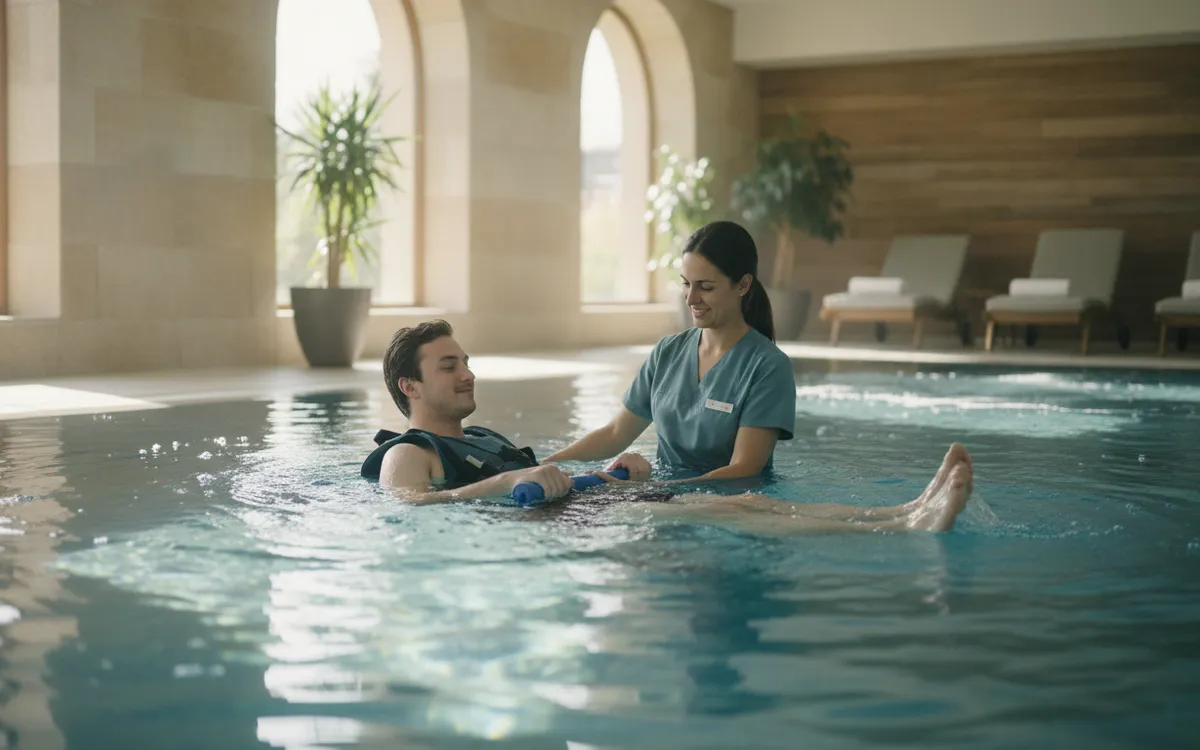
- Floating relaxation. Float on your back with noodle support. Focus on slow, deep breathing. 2-3 minutes. Let any accumulated heat dissipate through the water before exiting the pool.
- Ai Chi movements: Slow, tai chi-inspired flowing arm movements in shoulder-deep water. An excellent way to finish a session when you want to relax without generating heat. See the Ai Chi section below.
Managing MS Fatigue Through Aquatic Exercise
Fatigue is the most common and debilitating MS symptom. Paradoxically, regular aquatic exercise is one of the most effective ways to manage it. The way you structure each session matters as much as the exercises you choose.
- Pacing: Alternate 3 to 5 minutes of exercise with 1 to 2 minutes of standing rest in the water.
- Energy conservation: Use buoyancy aids to reduce energy expenditure during exercises that target specific muscle groups.
- Time of day: Most people with MS perform best in the morning, before cumulative fatigue builds. Schedule pool sessions accordingly.
- Session length: Start with 20 to 30 minute sessions. Increase gradually to 45 to 60 minutes as your tolerance improves.
- Post-exercise recovery: Allow 1 to 2 hours of rest after aquatic therapy before demanding activities.
Understanding the different types of hydrotherapy can help you find the approach that best manages your fatigue levels.
Ai Chi: A Specialised Approach for MS
Ai Chi is a water-based relaxation and strengthening technique. It combines elements of tai chi and qigong, performed in shoulder-deep water. For MS, keep the pool within the 27 to 31°C exercise range described above. Ai Chi suits people with MS well because:
- Movements are slow and controlled, which prevents overheating.
- The flowing nature of the exercises works on balance, coordination, and strength at the same time.
- The meditative component addresses the anxiety and depression common in MS.
- Sessions can be adapted to any ability level, from wheelchair users to people who walk independently.
If standard aquatic exercise feels too demanding, Ai Chi provides a gentler entry point into water-based therapy.
Building a Comprehensive MS Exercise Programme
Aquatic therapy works best when integrated into a broader exercise routine. Here is how water therapy fits into a complete weekly MS management programme:
- Monday: Aquatic therapy, 40 to 50 minutes. Balance and strengthening in the pool.
- Tuesday: Rest or gentle stretching, 15 to 20 minutes. Recovery and flexibility.
- Wednesday: Land-based physiotherapy, 30 to 40 minutes. Functional exercises and gait training.
- Thursday: Aquatic therapy, 40 to 50 minutes. Cardio walking with an Ai Chi cool-down.
- Friday: Rest or gentle yoga, 15 to 20 minutes. Mindfulness and flexibility.
- Saturday: Community walk or leisure swim, 20 to 30 minutes. Social engagement and gentle activity.
- Sunday: Rest. Full recovery day.
For insights on how hydrotherapy compares with conventional physiotherapy in your overall programme, see our hydrotherapy vs physical therapy comparison.
MS Subtypes and Water Therapy Approaches
Relapsing-Remitting MS (RRMS)
During remission periods, aquatic exercise can be performed at moderate intensity, focusing on building strength, cardiovascular fitness, and balance. During relapses, reduce intensity significantly or pause pool sessions, consult your neurologist. After a relapse resolves, aquatic therapy is excellent for regaining lost function because the buoyancy-supported environment allows you to practice movements before you are strong enough to perform them on land.
Secondary Progressive MS (SPMS)
As disability accumulates, the pool becomes increasingly valuable because buoyancy compensates for progressive weakness. Focus shifts toward maintaining function, managing spasticity, preventing falls, and preserving cardiovascular fitness. Water temperature management becomes even more important as the disease progresses.
Primary Progressive MS (PPMS)
Similar approach to SPMS. Consistent aquatic exercise helps maintain function and slow the rate of disability accumulation. The focus is on what the person can do, not what they cannot. Even gentle water-based movement has value for circulation, joint mobility, and psychological wellbeing.
Home-Based Water Therapy for MS
- Cool-to-lukewarm baths. Unlike most conditions on this site, people with MS should avoid hot baths. A lukewarm bath (30-33°C) can provide relaxation and gentle hydrostatic pressure benefits without triggering heat sensitivity. Add Epsom salts for magnesium-related muscle relaxation.
- Cool showers for symptom management. A cool shower (15-20°C) can temporarily improve MS symptoms by lowering core body temperature. Many people with MS use pre-cooling (cool shower before exercise) to extend their exercise tolerance. This is well-supported by research.
- Community pool sessions. Look for pools with temperatures in the 27-30°C range. Many competitive swimming pools and lap pools maintain cooler temperatures than therapy pools, making them more suitable for MS. 2-3 sessions per week provides meaningful benefits.
- Pool access for wheelchair users: Ask about hoists, ramps, and submersible wheelchairs. Many therapy pools provide them. Once you are in the water, buoyancy lets many wheelchair users stand, walk, and perform exercises that are impossible on land.
- Cool bath exercises: Fill a bathtub with water at 27 to 29°C and perform seated arm exercises and ankle movements. See our bath therapy guide for setup tips.
- Cold pack pre-cooling: Apply cold packs to the neck for 10 minutes before land-based exercise. This extends exercise tolerance by limiting the rise in core temperature.
- Home pool options: If you invest in a home pool, temperature control is essential for MS. Our pool vs hot tub comparison covers the key differences.
- Contrast therapy (modified). For people with MS, contrast therapy should emphasise the cool phase more than the warm phase. Use lukewarm (not hot) water alternating with cool water. This can help with limb circulation and mild spasticity without triggering heat sensitivity.
When to Avoid Hydrotherapy for MS
- During an active relapse. Consult your neurologist before exercising during a relapse. Mild movement may be acceptable, but vigorous exercise is typically not recommended until the relapse resolves.
- If the pool is too warm. Do not exercise in water above 33°C. If you notice any worsening of neurological symptoms (blurred vision, increased weakness, numbness) during a session, exit the pool immediately and cool down. These symptoms typically resolve within 30-60 minutes of cooling.
- Severe fatigue day. MS fatigue fluctuates. On days when fatigue is severe, skip the session or do only gentle floating and stretching. Pushing through severe fatigue can worsen symptoms for days afterward.
- Urinary tract infection. UTIs are common in MS due to bladder dysfunction. Resolve the infection before returning to the pool.
- Open wounds or pressure sores. Wait until fully healed.
- Hot tubs: Most people with MS should avoid traditional hot tubs, which operate at 37 to 40°C (98 to 104°F). This temperature can trigger Uhthoff's phenomenon within minutes, with temporary worsening of vision, fatigue, weakness, and cognitive symptoms. If you want jetted water, run the tub at a lukewarm setting (30 to 33°C, the same as a lukewarm bath) and exit immediately if you notice any symptom change.
- Severe heat sensitivity: If even cool water (28°C) triggers symptoms, water therapy may not be appropriate. Discuss this with your neurologist.
- Severe spasticity: Extremely high muscle tone may need medication adjustment before safe pool entry.
- Urinary incontinence: Common in MS and a barrier to pool use. Discuss management strategies with your MS nurse.
- Cognitive impairment: If you have significant cognitive difficulties, you need additional supervision to stay safe in the pool.
- Infection risk: Some MS disease-modifying therapies suppress the immune system. Verify the pool's hygiene standards before you attend. Review our guide to hydrotherapy risks and contraindications for general precautions.
Frequently Asked Questions
Is swimming safe for people with multiple sclerosis?
Yes, when the water temperature is appropriate (27-31°C for exercise). Swimming is one of the most recommended exercises for MS because it provides cardiovascular conditioning, full-body strengthening, and balance training with zero impact and effective heat dissipation. The key is water temperature, avoid warm therapy pools above 33°C. Many people with MS swim regularly as a cornerstone of their fitness routine. Always swim where a lifeguard or buddy is present.
Will hydrotherapy make my MS symptoms worse?
Not if the water temperature is managed correctly. Exercising in water at 27-31°C does not trigger Uhthoff's phenomenon or increase relapse risk, this has been established by multiple clinical studies. If you exercise in water that is too warm (above 33°C), you may experience temporary symptom worsening due to heat sensitivity, but this resolves within 30-60 minutes of cooling down. It does not cause permanent harm or disease progression.
How often should someone with MS do aquatic exercise?
Research protocols showing significant benefits typically use 2-3 sessions per week for 8-12 weeks. Each session lasts 30-60 minutes depending on fatigue tolerance. Improvements in fatigue, walking speed, and balance are typically measurable within 4-6 weeks. Most neurologists and physiotherapists recommend maintaining regular aquatic exercise indefinitely as part of ongoing MS management.
Can hydrotherapy help MS fatigue?
Yes. MS fatigue is one of the symptoms most consistently improved by aquatic exercise. This seems counterintuitive (exercise to reduce fatigue) but the evidence is clear. Regular aquatic exercise at appropriate intensity improves cardiovascular efficiency, muscle strength, and sleep quality, all of which contribute to reduced fatigue severity. The water environment allows people with MS to exercise at sufficient intensity to achieve these benefits without the heat-induced symptom worsening that limits land-based exercise.
Related Reading
- 12 Hydrotherapy Exercises for Pain Relief and Recovery
- Hydrotherapy for Elderly Fall Prevention
- Hydrotherapy vs Physical Therapy
- Hydrotherapy for Health Conditions A-Z
Always consult your neurologist and a physiotherapist experienced in MS before starting an aquatic exercise programme. Water temperature management is critical for safety. See our Medical Disclaimer.
Sources
[1] Corvillo, I., et al. (2020). Aquatic therapy for people with multiple sclerosis: A systematic review and meta-analysis. Multiple Sclerosis and Related Disorders, 46, 102494.
[2] Salem, Y., et al. (2011). Aquatic exercise for people with multiple sclerosis: A randomized controlled trial. Journal of Neurologic Physical Therapy, 35(1), 13-20.
[3] Mooventhan, A., & Nivethitha, L. (2014). Scientific Evidence-Based Effects of Hydrotherapy on Various Systems of the Body. North American Journal of Medical Sciences, 6(5), 199-209.
[4] Journal of Orthopaedic Surgery and Research (2023). Efficacy of aquatic exercise in chronic musculoskeletal disorders: A meta-analysis of 32 randomized controlled trials.