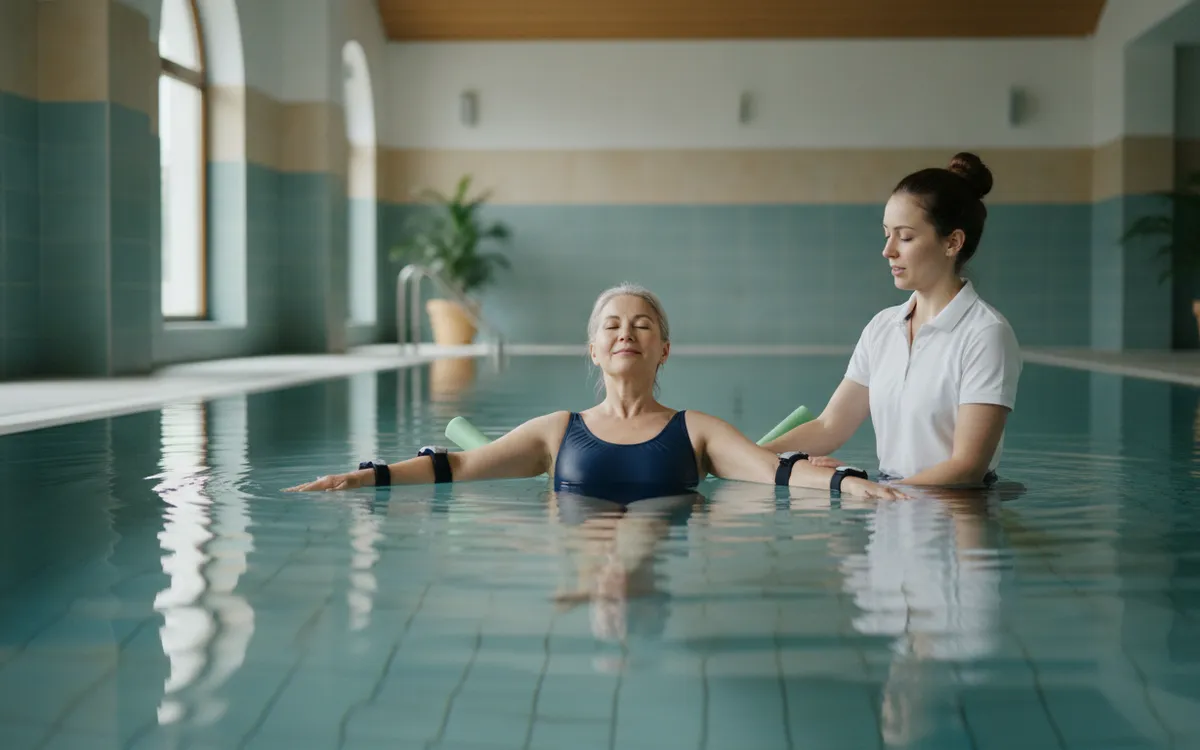
Aqua Yoga: Combining Yoga and Water Therapy for Deeper Flexibility, Balance, and Relaxation
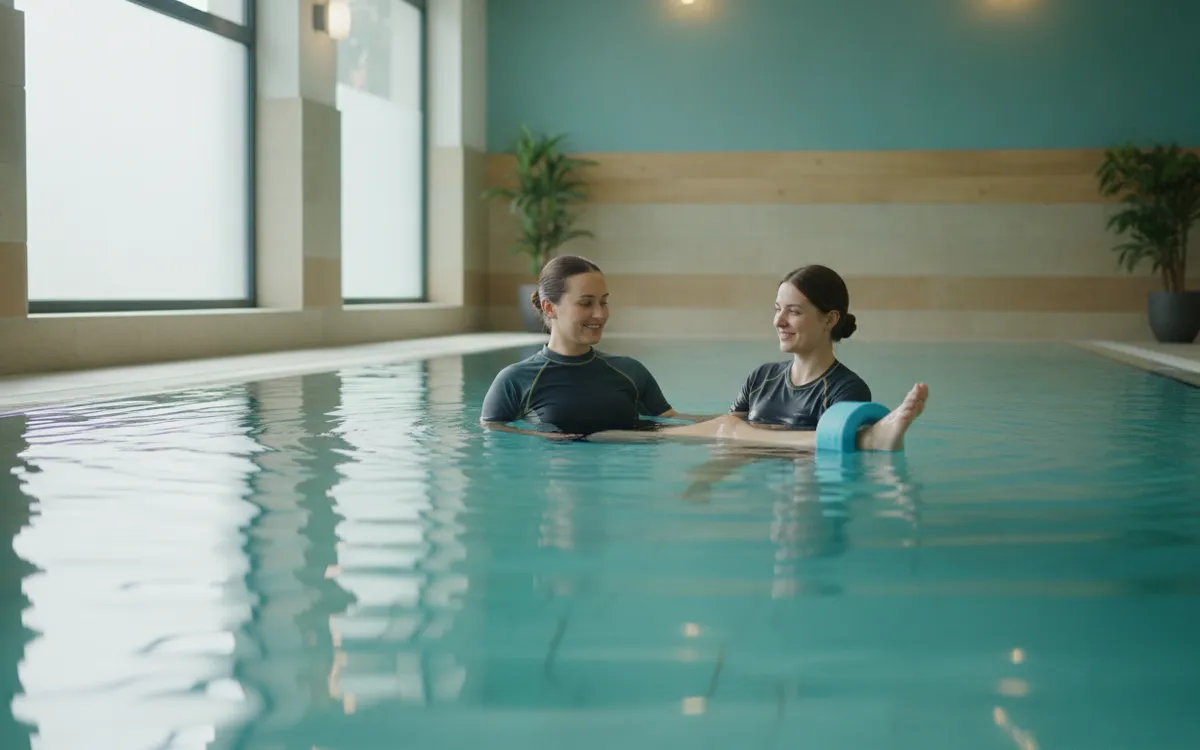
If you have ever wanted to try yoga but found the poses too demanding, the floor too hard, or the balance too precarious, aqua yoga may be exactly what you need.
What Makes Aqua Yoga Different from Land Yoga
Aqua yoga is not simply doing regular yoga poses while standing in water. The aquatic environment fundamentally changes the practice in several important ways:
- Buoyancy eliminates 50-90% of body weight (depending on water depth), making poses accessible to people with joint pain, arthritis, or obesity. A Warrior II pose that stresses arthritic knees on land becomes comfortable and therapeutic in waist-deep water
- Water resistance replaces gravity as the primary force acting on the body. Movements become slower, more mindful, and require core engagement to maintain stability — enhancing the meditative quality of yoga
- Warm water (32-35°C) relaxes muscles before stretching begins, allowing deeper, safer stretches than cold muscles achieve on a yoga mat
- Balance becomes a different challenge. While water supports the body, it also creates subtle, unpredictable currents that challenge proprioception in ways that a solid floor does not. This makes aqua yoga an excellent balance training tool
- No floor work required. All poses are performed standing or using pool features for support, eliminating the difficulty of getting up and down from the floor — a significant barrier for many older adults and those with mobility limitations
The science behind these benefits is detailed in our hydrotherapy science article, and our warm water therapy guide explains the specific mechanisms of thermal benefits.
Research on Aqua Yoga
| Study | Participants | Protocol | Key Findings |
|---|---|---|---|
| Garrett et al., 2023 (Complementary Therapies in Medicine) | 60 older adults with OA | 12 weeks, 2x/week aqua yoga | Significant improvements in joint pain, flexibility, and balance confidence; 90% adherence rate |
| Patel et al., 2022 (J. Alternative & Complementary Medicine) | 45 women with chronic low back pain | 8 weeks, 3x/week | Aqua yoga group showed 35% pain reduction vs. 20% in land yoga group |
| Henriksson et al., 2023 (Disability and Rehabilitation) | 34 adults with fibromyalgia | 10 weeks aqua yoga programme | Improved pain, sleep quality, and emotional well-being; reduced medication use |
| Santos et al., 2022 (Geriatrics & Gerontology International) | 50 adults aged 65+ | 16 weeks, 2x/week | 29% improvement in Berg Balance Scale; 22% improvement in functional reach |
Essential Aqua Yoga Poses
The following poses are adapted from traditional yoga for the water environment. Perform them in warm water (32-35°C) at waist to chest depth. Hold each pose for 3-5 breaths unless otherwise noted. As with all water exercises described in our hydrotherapy exercises guide, focus on controlled, mindful movement.
Standing Poses
| Pose (Water Name) | Land Equivalent | How to Perform | Benefits |
|---|---|---|---|
| Water Mountain | Tadasana | Stand tall in chest-deep water, feet hip-width, arms at sides, palms facing forward. Press feet into pool floor, lengthen spine | Posture awareness, grounding |
| Water Warrior I | Virabhadrasana I | Step one foot forward into lunge, back foot at 45°. Raise arms overhead through the water | Hip flexor stretch, leg strength |
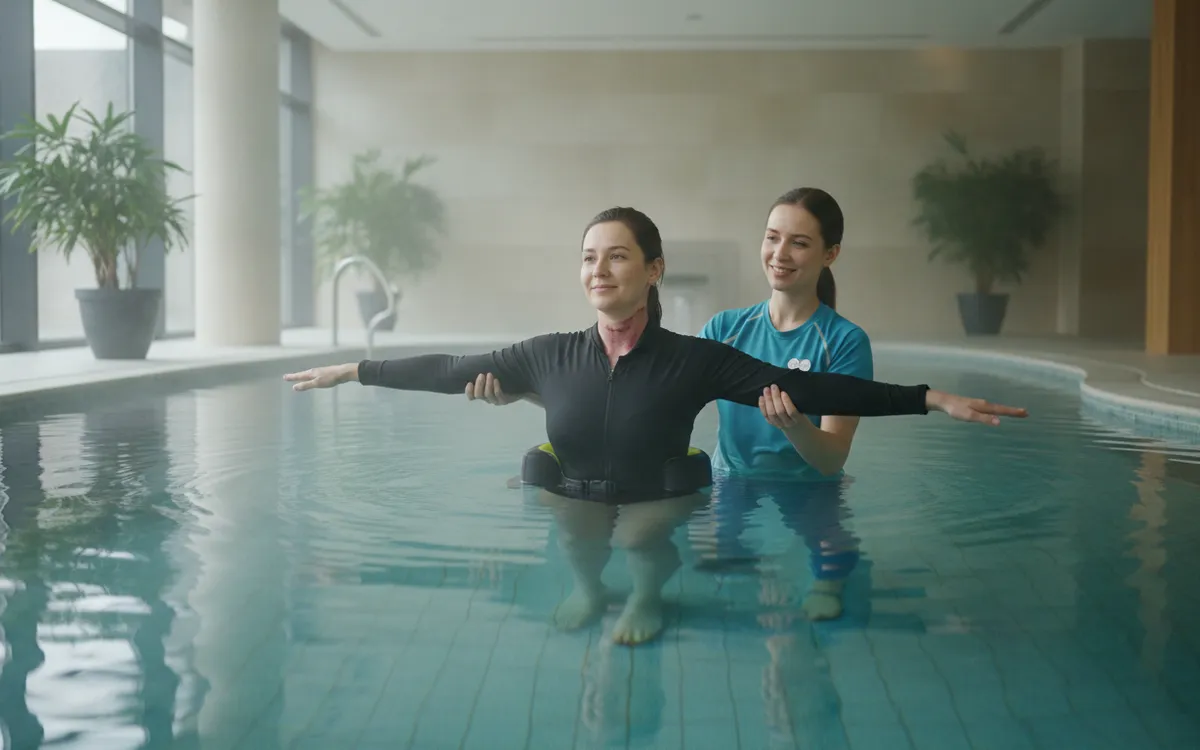
| Water Warrior II | Virabhadrasana II | Wide stance, front knee bent, arms extended to sides at water surface. Gaze over front hand | Hip opening, inner thigh stretch |
| Water Tree | Vrksasana | Stand on one leg, place other foot on inner calf or thigh (not knee). Arms overhead or at heart | Balance, focus, hip mobility |
| Water Triangle | Trikonasana | Wide stance, extend sideways toward front foot, top arm reaches up through water | Side body stretch, spinal mobility |
| Water Chair | Utkatasana | Feet together, bend knees as if sitting, arms extended forward against water resistance | Quadricep strength, core engagement |
Balance Poses
| Pose | Land Equivalent | How to Perform | Benefits |
|---|---|---|---|
| Water Dancer | Natarajasana | Stand on one leg, hold opposite foot behind you, extend other arm forward | Balance, backbend, focus |
| Water Eagle | Garudasana | Cross one thigh over other, wrap arms (or simply cross at elbows). Sink slightly into standing leg | Balance, shoulder stretch |
| Water Half Moon | Ardha Chandrasana | From triangle, lift back leg to hip height while hand touches pool wall for support | Advanced balance, hip strength |
Flowing Sequences
Water Sun Salutation (modified):
- Mountain pose — stand tall, inhale, arms sweep up through water
- Forward fold — exhale, fold forward at hips, hands reach toward pool floor
- Half lift — inhale, hands on thighs, lengthen spine
- Lunge right — step right foot back, exhale into lunge
- Lunge left — step left foot back, exhale into lunge
- Forward fold — step forward, exhale
- Rise to mountain — inhale, sweep arms up and return to standing
- Repeat 3-5 times, moving with breath
Water Flow Sequence:
- Mountain pose — 3 breaths
- Warrior I (right) — 3 breaths
- Warrior II (right) — 3 breaths
- Triangle (right) — 3 breaths
- Return to Mountain — 1 breath
- Repeat on left side
- Tree pose (right then left) — 5 breaths each
- Chair pose — 3 breaths
- Return to Mountain — close with 5 slow breaths
Relaxation and Breathing
| Practice | How to Perform | Duration | Benefits |
|---|---|---|---|
| Floating Savasana | Float on back with pool noodle under knees and neck. Close eyes, breathe slowly | 5-10 min | Deep relaxation, spinal decompression |
| Water Pranayama | Stand in chest-deep water. Inhale 4 counts, hold 4, exhale 6 counts. Feel water pressure assist exhalation | 3-5 min | Stress reduction, respiratory function |
| Walking Meditation | Walk very slowly in waist-deep water, focus entirely on each footstep sensation | 5 min | Mindfulness, balance, sensory awareness |
Who Benefits Most from Aqua Yoga
While anyone can enjoy aqua yoga, it is particularly beneficial for:
- People with arthritis: The combination of warm water and gentle movement is ideal for arthritic joints. Our arthritis hydrotherapy guide explores this connection in depth
- Seniors: Balance training in water with zero fall risk makes aqua yoga one of the safest exercise forms for older adults. See our hydrotherapy for seniors guide
- People with fibromyalgia: The Henriksson et al. (2023) study found significant improvements in pain and sleep. Our fibromyalgia guide covers additional approaches
- Pregnant women: Aqua yoga provides the flexibility and relaxation benefits of prenatal yoga without the balance risk or floor-work difficulty. See our pregnancy hydrotherapy guide
- People with chronic back pain: Buoyancy decompresses the spine while yoga postures strengthen the core. Our back pain guide covers complementary approaches
- Those intimidated by traditional yoga: Water provides support and privacy (your body is submerged), making the practice feel less exposing and more accessible
Getting Started: What You Need
- Pool access: A warm therapy pool (32-35°C) at waist-to-chest depth is ideal. Some community pools and wellness centres offer dedicated aqua yoga classes
- Swimwear: Comfortable, secure swimwear that allows full range of movement
- Pool noodle: Useful for floating Savasana and for balance support during standing poses
- Water shoes: Optional but helpful for grip on smooth pool floors during balance poses
- Open mind: Aqua yoga feels different from land yoga — embrace the unique sensations rather than expecting an identical experience
If practising at home, our bath therapy guide includes relaxation techniques that complement aqua yoga, and our tub guide covers home options for warm water immersion.
Integrating Aqua Yoga with Other Water Therapies
Aqua yoga works beautifully as part of a broader water therapy programme. Consider combining it with:
- Aqua aerobics: For cardiovascular fitness on alternate days
- Therapeutic swimming: For full-body conditioning
- Contrast therapy: Cool down after aqua yoga with a brief cool water immersion for recovery benefits. See our contrast therapy guide
- Hydrotherapy tub sessions: Use jetted tubs for targeted muscle relief after aqua yoga practice
For an overview of all available water-based therapies, our types of hydrotherapy article covers the full spectrum of options.
Frequently Asked Questions
Do I need yoga experience to try aqua yoga?
No. Aqua yoga is actually an excellent way to begin a yoga practice because the water provides support and forgiveness that a yoga mat does not. Many people who struggle with land yoga due to stiffness, balance problems, or joint pain find aqua yoga immediately accessible and enjoyable. Instructors adapt poses for all experience levels, and the water naturally slows movement, giving you more time to learn each posture. If you have never done yoga before, aqua yoga may be the best possible starting point.
What is the ideal water temperature for aqua yoga?
Most aqua yoga classes are held in water between 32-35°C (90-95°F), which is warm enough to relax muscles for stretching but cool enough to exercise comfortably. Temperatures above 35°C may cause overheating during active sequences, while temperatures below 30°C can make relaxation poses uncomfortable. If your pool is cooler, focus more on active flowing sequences and less on still holding poses. If warmer, include longer rest periods and hydrate frequently.
Can aqua yoga help with weight loss?
While aqua yoga is not a high-intensity calorie burner, it contributes to weight management in several ways: it burns more calories than land yoga due to water resistance (estimates suggest 30-50% more calorie expenditure), it builds lean muscle that increases resting metabolism, and the stress-reduction benefits may help reduce cortisol-driven emotional eating. For more targeted weight management through water exercise, see our hydrotherapy for weight loss guide.
How is aqua yoga different from Ai Chi?
Ai Chi is a specific aquatic relaxation and exercise technique based on tai chi and qigong principles, performed in shoulder-deep water with flowing, continuous arm movements. Aqua yoga draws from the broader yoga tradition, incorporating specific postures (asanas), breathing techniques (pranayama), and meditation. There is overlap — both are slow, mindful water practices — but aqua yoga typically includes more varied postures, balance challenges, and flexibility work, while Ai Chi focuses more on flowing movement and energy awareness. Many water therapy programmes include elements of both.
Is aqua yoga safe for people with high blood pressure?
For most people with controlled hypertension, aqua yoga in warm water is safe and may actually help lower blood pressure through relaxation and gentle exercise. However, the hydrostatic pressure of water increases blood return to the heart, which temporarily raises cardiac workload. If you have uncontrolled hypertension, a history of heart failure, or take blood pressure medications, consult your doctor before starting. Avoid holding your breath during poses (Valsalva manoeuvre), as this can spike blood pressure temporarily. Our hydrotherapy risks guide covers cardiovascular precautions in detail.
]]>