Hydrotherapy for Children: Water-Based Therapy for Developmental Delays, Disabilities, and Paediatric Conditions
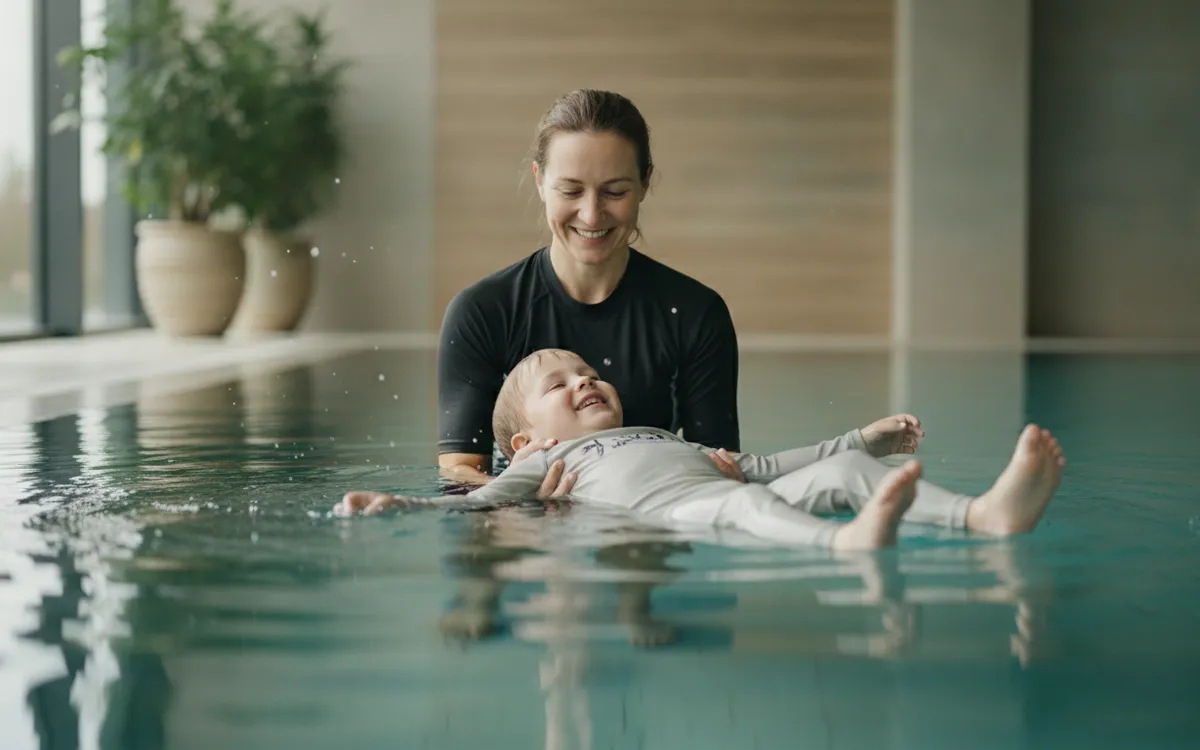
Paediatric aquatic therapy harnesses the same physical principles described in our science of hydrotherapy article — buoyancy, hydrostatic pressure, warmth, and resistance — but applies them to developing bodies and minds. The results can be remarkable: children who cannot stand on land may walk in water; children with sensory processing difficulties may find the water's all-encompassing input calming; and children with chronic pain may play freely for the first time.
Conditions That Benefit from Paediatric Aquatic Therapy
| Condition | How Water Helps | Key Benefits |
|---|---|---|
| Cerebral palsy | Buoyancy supports movement; warmth reduces spasticity | Improved ROM, reduced spasticity, better gait patterns. See our CP guide |
| Autism spectrum disorder | Consistent sensory input calms; structured water play builds social skills | Reduced anxiety, improved body awareness, social interaction |
| Down syndrome | Buoyancy compensates for low muscle tone; resistance builds strength | Improved gross motor skills, cardiovascular fitness, self-esteem |
| Developmental coordination disorder (DCD) | Water slows movement, providing more time for motor planning | Better coordination, balance, and movement confidence |
| Muscular dystrophy | Buoyancy enables movement that gravity prevents; maintains function | Preserved range of motion, cardiovascular fitness, quality of life |
| Juvenile arthritis | Warm water reduces pain; exercise without joint loading | Maintained mobility, reduced pain, improved function |
| Spina bifida | Buoyancy supports weakened lower limbs; enables weight-bearing | Improved mobility, trunk strength, cardiovascular fitness |
| Post-fracture / post-surgical | Early mobilisation with reduced weight-bearing | Faster recovery, maintained fitness during recovery period |
| Obesity | Joint protection during exercise; reduced exercise-related pain | Sustainable exercise programme, cardiovascular fitness, confidence |
| Sensory processing difficulties | Water provides consistent proprioceptive and tactile input | Improved sensory modulation, calming effect, body awareness |
Research on Paediatric Aquatic Therapy
| Study | Population | Protocol | Key Findings |
|---|---|---|---|
| Lai et al., 2023 (Developmental Medicine & Child Neurology) | 48 children with CP (ages 4-12) | 12 weeks, 2x/week, 33°C | Significant improvements in GMFM scores, walking speed, and parent-reported quality of life |
| Mortimer et al., 2022 (J. Autism & Developmental Disorders) | 30 children with ASD (ages 5-10) | 10 weeks aquatic programme | Improved social communication; reduced anxiety behaviours; 93% attendance rate (vs. 65% for land-based programme) |
| Fragala-Pinkham et al., 2023 (Physical Therapy) | 24 children with various disabilities | 14 weeks community aquatic programme | Improved functional strength, endurance, and participation; effects maintained at 6-month follow-up |
| Kelly & Darrah, 2022 (Pediatric Physical Therapy) | Systematic review, 18 studies | Various paediatric aquatic interventions | Moderate evidence for improved gross motor function, balance, and quality of life across multiple conditions |
Water Temperature for Children
Children are more sensitive to temperature extremes than adults due to their higher surface-area-to-volume ratio. Our temperature guide covers adult recommendations, and here are paediatric-specific guidelines:
| Age Group | Recommended Temperature | Notes |
|---|---|---|
| Infants (0-12 months) | 34-36°C | Higher temp due to rapid heat loss; sessions under 20 min |
| Toddlers (1-3 years) | 33-35°C | Slightly cooler than infants; monitor for chilling signs |
| Young children (4-7 years) | 32-34°C | Warm enough for comfort; cool enough for active play |
| Older children (8-12 years) | 31-34°C | Range depends on condition and activity level |
| Adolescents (13+) | 30-34°C | Similar to adult therapeutic range |
Aquatic Activities by Developmental Stage
Infants and Toddlers (0-3 Years)
Aquatic therapy for very young children focuses on sensory experience, parent-child bonding, and early movement patterns:
- Supported floating: Parent holds baby in supine position, providing vestibular input and relaxation
- Kicking play: Support baby in prone or supine position while encouraging leg kicks — strengthens hip and knee extensors
- Reaching for toys: Place floating toys just out of reach to encourage arm extension and trunk rotation
- Splashing games: Bilateral arm movements, developing coordination and upper body strength
- Blowing bubbles: Builds oral motor control and breath control — important for speech development
- Sit-to-stand transitions: Practice on submerged bench with buoyancy support
Pre-School (3-5 Years)
- Animal walks: Walk like different animals (bear crawl, crab walk, frog jumps) in shallow water — builds strength and coordination through imaginative play
- Obstacle courses: Step over noodles, duck under floating objects, walk along lines — develops motor planning and balance
- Ball games: Throwing, catching, and pushing balls in water — bilateral coordination and social skills
- Ring collection: Pick up sinking rings from pool floor — develops diving confidence, breath-holding, and balance
- Song-based movement: Action songs with corresponding water movements — rhythm, memory, and following instructions
School-Age (6-12 Years)
- Swimming skill development: Adapted swimming instruction targeting specific motor goals alongside general water safety
- Relay races and team games: Social skills, cardiovascular fitness, and competition in a supportive environment
- Resistance circuits: Age-appropriate versions of adult exercises — squats, lunges, arm exercises against water resistance
- Underwater challenges: Breath-holding, diving for objects, underwater swimming — builds confidence and respiratory strength
- Aquatic sports: Water polo adaptations, water basketball, synchronised swimming elements — functional skills through sport
Adolescents (13+ Years)
- Fitness swimming: Structured swimming programmes for cardiovascular fitness and endurance
- Aqua fitness classes: Adapted group fitness in water — social engagement alongside physical benefit
- Sport-specific training: Using water for rehabilitation after sports injuries or as cross-training
- Independent therapy routines: Teaching self-directed aquatic exercise programmes for lifelong management
Aquatic Therapy for Children with Autism
The water environment offers unique benefits for children on the autism spectrum:
- Sensory regulation: The consistent proprioceptive input from hydrostatic pressure and the tactile sensation of water can be profoundly calming for children with sensory processing difficulties. Many children who are overstimulated on land find the water's all-encompassing input organising
- Reduced sensory overload: A pool environment has fewer visual and auditory distractions than a busy therapy room or playground
- Social skills practice: Structured water games provide natural opportunities for turn-taking, sharing, eye contact, and communication in a motivating context
- Routine and predictability: The consistent structure of pool sessions (changing, entering, exercises, game, exit) provides the predictability that many autistic children need
- Physical fitness: Children with ASD often have lower physical fitness levels than neurotypical peers. Water exercise addresses this in an enjoyable, low-anxiety setting
The Mortimer et al. (2022) study found a remarkable 93% attendance rate for the aquatic programme, compared to 65% for an equivalent land-based programme — demonstrating that water therapy is not just effective but genuinely engaging for children with autism.
Safety Considerations for Paediatric Aquatic Therapy
Our risks and contraindications guide covers general hydrotherapy safety, and here are child-specific considerations:
- Constant supervision: Children must never be left unattended in or near water, regardless of their swimming ability or age. Drowning can occur silently in seconds
- Ratio requirements: For children with significant disabilities, 1:1 therapist-to-child ratios are standard. For less affected children in group settings, 1:3 is typical
- Temperature monitoring: Children cool faster than adults. Watch for signs of chilling (blue lips, shivering, goosebumps) and remove from water immediately
- Water ingestion: Young children and those with swallowing difficulties may accidentally swallow pool water. Ensure pool chemical levels are properly maintained
- Seizure precautions: Children with epilepsy (common in many developmental conditions) require 1:1 supervision and immediate access to pool exit
- Skin conditions: Check for open wounds, eczema flares, or skin infections before pool entry. Some skin conditions are aggravated by chlorine
- Ear protection: Children with ear tubes (grommets) may need waterproof ear plugs
- Behavioural management: Have clear, simple pool rules. Children who are anxious about water should be introduced very gradually — never force pool entry
Finding Paediatric Aquatic Therapy
Access to appropriate paediatric aquatic therapy requires:
- Qualified therapists: Look for physiotherapists or occupational therapists with specific paediatric aquatic therapy training
- Appropriate facilities: Warm water (32-35°C), shallow entry options, hoists if needed, child-friendly changing facilities
- Referral pathway: Your child's paediatrician, physiotherapist, or occupational therapist can refer to aquatic therapy services
- Community programmes: Many disability support organisations run adapted swimming and aquatic therapy programmes at local pools
For home-based water play and therapy, our bath therapy guide includes ideas that can be adapted for children, and our equipment guide reviews family-friendly options.
Frequently Asked Questions
At what age can children start aquatic therapy?
Aquatic therapy can begin from 6 months of age, and in some specialised programmes, even earlier. Baby swimming and aquatic therapy programmes typically start at 3-6 months. The key criteria are: the baby can hold their head up, there are no open wounds or active infections, and the pool water temperature is appropriate (34-36°C for infants). For babies with specific medical conditions, early aquatic intervention may be recommended by the paediatric team from just a few months of age, with careful attention to temperature, session duration (10-15 minutes initially), and one-to-one support.
Will aquatic therapy help my child walk?
For children with motor delays or disabilities, aquatic therapy can significantly contribute to the development of walking skills. The buoyancy of water allows children to practise the stepping patterns, weight-shifting, and balance reactions needed for walking — often before they can achieve these milestones on land. The Lai et al. (2023) study showed significant improvements in walking speed and gross motor function in children with cerebral palsy after 12 weeks of aquatic therapy. However, outcomes depend on the underlying condition and its severity. Water therapy is a powerful tool within a comprehensive rehabilitation programme, not a standalone miracle cure.
My child is afraid of water — can they still benefit from aquatic therapy?
Yes, but the approach must be gradual and child-led. Experienced paediatric aquatic therapists use systematic desensitisation — starting with simply being near the pool, then touching the water, sitting on the edge with feet in the water, and very gradually entering at the child's pace. This process may take several sessions before the child enters the water, and that is perfectly acceptable. Forcing a frightened child into the water is counterproductive and can create lasting aversion. Most children who start with significant water anxiety become enthusiastic pool users within 4-8 sessions when the introduction is handled sensitively.
How is aquatic therapy different from swimming lessons for children with disabilities?
Aquatic therapy is provided by qualified therapists (physiotherapists, occupational therapists) with specific therapeutic goals: improving motor function, reducing spasticity, developing balance, managing pain, or addressing sensory processing. Swimming lessons, even adapted ones, focus on teaching water safety and swimming skills. The two are complementary — many children benefit from both. Aquatic therapy addresses specific impairments and functional goals, while adapted swimming lessons build water confidence, fitness, and an important life skill. Some programmes blend both approaches.
Does insurance cover aquatic therapy for children?
Coverage varies significantly by insurance plan and country. In many cases, aquatic therapy is covered when prescribed by a physician and provided by a licensed therapist as part of a treatment plan for a diagnosed condition. It may be billed under physical therapy or occupational therapy codes. Check with your insurance provider about specific coverage for "aquatic physical therapy" or "aquatic occupational therapy." Early intervention programmes for children under 3 often include aquatic therapy as a covered service. If insurance does not cover it, community disability organisations and charitable pools may offer subsidised or free sessions.
]]>