Hydrotherapy for Spinal Cord Injury: Aquatic Rehabilitation to Restore Movement, Strength, and Independence
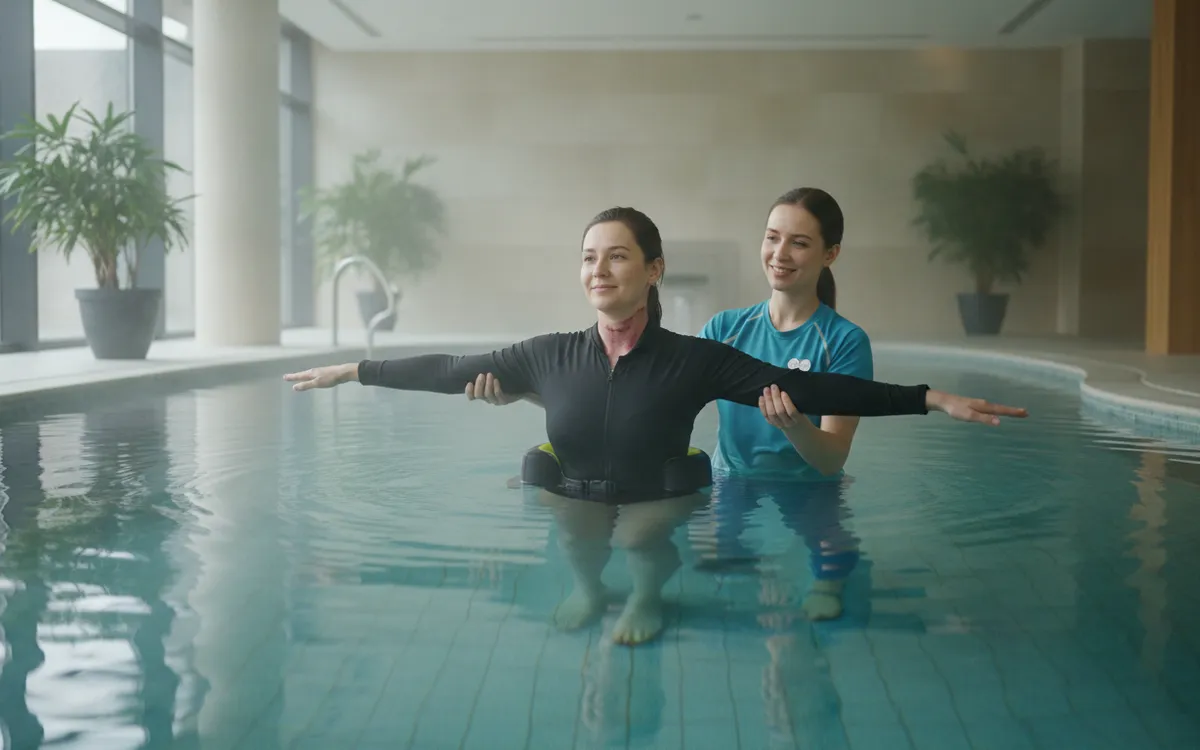
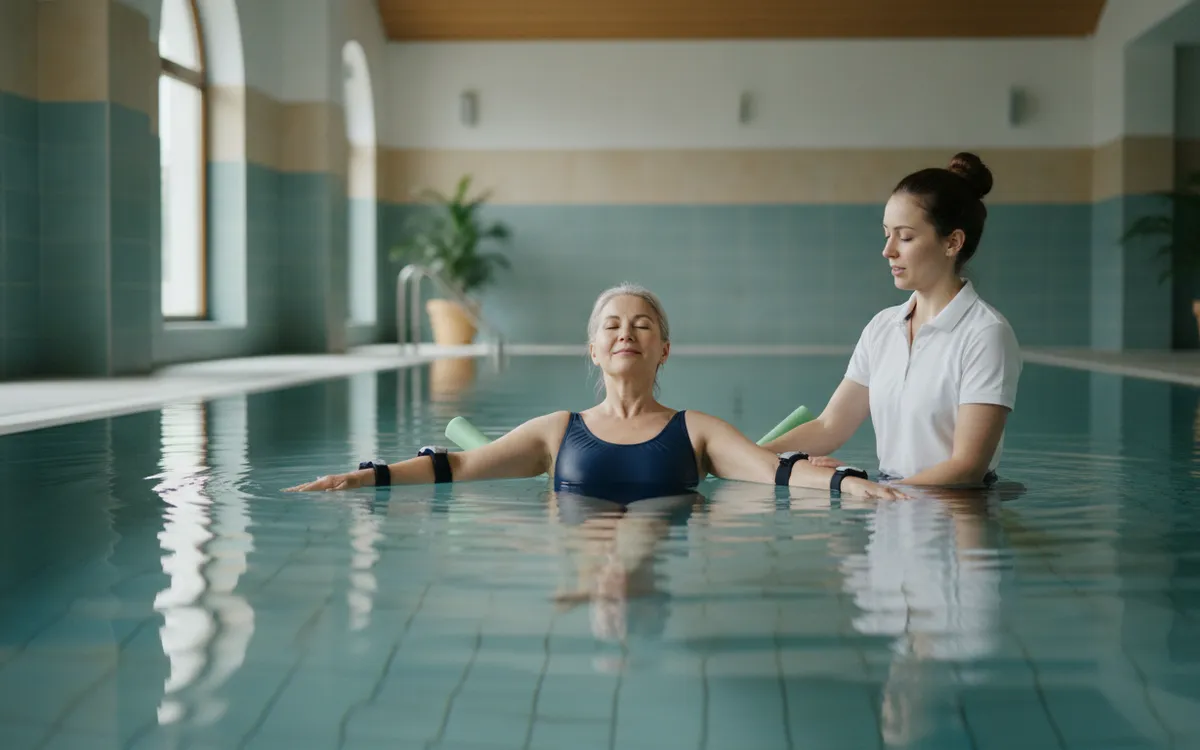
In a therapy pool, buoyancy supports up to 90% of body weight, allowing SCI patients to stand, step, and move limbs that cannot function against gravity on land. The warm water reduces spasticity, the hydrostatic pressure supports circulatory function, and the multisensory environment stimulates neuroplasticity. For many spinal cord injury survivors, the pool is the only place where they experience upright, weight-bearing movement — and that experience has profound implications for both physical recovery and psychological well-being.
Why Aquatic Therapy Is Essential for SCI Rehabilitation
The unique properties of water address virtually every challenge that SCI patients face. As detailed in our science of hydrotherapy article, these mechanisms work synergistically:
- Buoyancy-assisted movement: Muscles graded as 2/5 or even 1/5 on manual muscle testing (unable to move against gravity) can often produce functional movement when supported by buoyancy. This allows exercise that would be impossible on land
- Spasticity management: Warm water (33-35°C) combined with hydrostatic pressure significantly reduces the spasticity that affects up to 80% of SCI patients and interferes with rehabilitation
- Cardiovascular support: SCI disrupts autonomic regulation of blood pressure and heart rate. Hydrostatic pressure supports venous return and cardiac output, compensating for impaired autonomic control and reducing the orthostatic hypotension common in higher-level injuries
- Respiratory training: For patients with thoracic or cervical injuries, the hydrostatic pressure on the chest provides resistance for respiratory muscles during breathing, effectively strengthening the muscles of respiration
- Proprioceptive input: The constant sensory input from water on the skin provides feedback to areas where sensation may be partially intact, potentially supporting neuroplastic recovery
- Thermoregulation assistance: SCI impairs the body's ability to regulate temperature below the level of injury. The controlled temperature of a therapy pool provides a safe thermal environment for exercise
Evidence for Aquatic Therapy in SCI
| Study | Participants | Protocol | Key Findings |
|---|---|---|---|
| Stevens et al., 2023 (Spinal Cord) | Systematic review, 12 studies | Various aquatic protocols | Moderate-to-strong evidence for improvements in spasticity, pain, and psychological well-being |
| Jung et al., 2022 (Disability & Rehabilitation) | 28 incomplete SCI patients | 8 weeks, 3x/week, 33°C | Significant improvements in walking speed (WISCI II) and lower extremity motor score |
| Tamburella et al., 2023 (Neurorehabilitation) | 20 chronic SCI patients | 12 weeks aquatic treadmill training | Improved gait parameters; 3 participants progressed from wheelchair to assisted walking |
| Recio et al., 2022 (J. Spinal Cord Medicine) | 15 complete SCI patients | 16 weeks, 2x/week | Reduced spasticity (Modified Ashworth Scale); improved upper body strength; significant pain reduction |
| Marinho-Buzelli et al., 2023 (Archives of PM&R) | 22 SCI patients (various levels) | Structured aquatic programme | Improved trunk control; enhanced respiratory function; positive psychological outcomes |
Aquatic Therapy by Injury Level
The approach to aquatic therapy varies significantly based on the level and completeness of spinal cord injury:
Cervical Injuries (C1-C8 / Tetraplegia)
Key challenges: Limited or absent upper and lower extremity function, impaired respiratory function, autonomic dysreflexia risk, thermoregulation difficulties
| Exercise | Purpose | How to Perform | Supervision Level |
|---|---|---|---|
| Supported floating | Relaxation, spasticity reduction | Float on back with therapist support and flotation aids, warm water | 1:1 therapist |
| Passive ROM in water | Joint mobility maintenance | Therapist moves limbs through full range using buoyancy assistance | 1:1 therapist |
| Breathing against water pressure | Respiratory strengthening | Chest-deep immersion with focused breathing exercises | 1:1 therapist |
| Active-assisted shoulder movements | Maintain/improve available function | Use buoyancy to assist shoulder flexion, abduction with whatever voluntary control exists | 1:1 therapist |
| Trunk stability in supported sitting | Core activation | Sit on pool bench with therapist support, practise maintaining upright posture against gentle water currents | 1:1 therapist |
Safety notes: Patients with cervical injuries above C6 are at risk of autonomic dysreflexia — a potentially dangerous spike in blood pressure triggered by stimuli below the injury level. Pool temperature must be carefully monitored (not above 34°C), and staff must be trained to recognise and respond to autonomic dysreflexia symptoms.
Thoracic Injuries (T1-T12 / Paraplegia)
Key challenges: Lower extremity paralysis or weakness, impaired trunk control, spasticity, reduced cardiovascular fitness
| Exercise | Purpose | How to Perform | Supervision Level |
|---|---|---|---|
| Upper body strengthening | Wheelchair propulsion fitness | Arm pulls, push-ups against pool wall, overhead presses against water resistance | 1:1 or 2:1 |
| Trunk rotation and control | Core stability for sitting balance | Seated on bench, rotate torso against water resistance; practise reaching in all directions | 1:1 or 2:1 |
| Standing frame in water | Weight-bearing, bone density | Supported standing in chest-deep water using parallel bars or therapist support | 1:1 therapist |
| Leg exercises with buoyancy | Maintain ROM, reduce spasticity | Passive and active-assisted leg movements using buoyancy — hip flexion, knee extension, ankle movements | 1:1 therapist |
| Aquatic wheelchair racing drills | Cardiovascular fitness, sport | Swim laps using adapted strokes; use pool resistance for upper body intervals | 2:1 possible |
Incomplete Injuries (Any Level, ASIA B-D)
Key opportunity: Patients with incomplete injuries retain some motor or sensory function below the injury level. Aquatic therapy can capitalise on this preserved function through buoyancy-assisted exercise that may promote neuroplastic recovery.
| Exercise | Purpose | How to Perform | Progression |
|---|---|---|---|
| Buoyancy-assisted walking | Gait retraining | Walk in chest-deep water with therapist support, focusing on reciprocal stepping pattern | Reduce water depth as strength improves |
| Underwater treadmill | Repetitive stepping practice | Walk on underwater treadmill at progressively faster speeds with body weight support | Increase speed, reduce support |
| Balance training | Standing stability | Stand in waist-deep water, practise weight shifts, reaching, perturbation responses | Reduce hand support, add challenges |
| Resistance exercises | Strengthening available muscles | Use water resistance, paddles, and pool noodles for progressive resistance training | Increase resistance and repetitions |
| Step-ups and squats | Functional lower extremity strength | Use pool steps for step-ups; wall squats in water with progressively less buoyancy support | Reduce water depth for greater loading |
The Tamburella et al. (2023) study, which used underwater treadmill training for chronic incomplete SCI, demonstrated that even patients years post-injury can make meaningful gait improvements — with 3 of 20 participants progressing from wheelchair-dependent to assisted walking after 12 weeks of aquatic treadmill training. Our underwater treadmill guide covers this technology in detail.
Spasticity Management in Water
Spasticity is one of the most common secondary complications of SCI, affecting daily function, sleep, and comfort. Aquatic therapy is one of the most effective non-pharmacological approaches to spasticity management:
- Immediate effect: Warm water immersion (33-35°C) reduces spasticity measurably within 10-15 minutes through thermal effects on gamma motor neurons
- Hydrostatic pressure: The constant, even pressure of water provides sensory input that competes with spastic signals
- Slow stretching in water: Buoyancy enables prolonged, comfortable stretches of spastic muscles without the resistance of gravity
- Lasting effect: The Recio et al. (2022) study found that spasticity reduction persisted for 2-4 hours after each pool session, and cumulative improvement was seen over the 16-week programme
Begin each pool session with 10-15 minutes of gentle floating or slow passive movement in warm water before progressing to active exercises. This "spasticity reduction window" makes subsequent exercises more productive.
Psychological Impact of Aquatic Therapy for SCI
The psychological benefits of aquatic therapy for SCI patients cannot be overstated:
- Movement experience: For wheelchair users, the pool may be the only environment where they experience standing and stepping. This has profound psychological value beyond the physical benefit
- Body image: Water provides a level of privacy (submerged body) while simultaneously enabling movement, creating a positive body experience
- Social connection: Group aquatic therapy sessions provide peer support with others who understand the SCI experience
- Autonomy: In water, many SCI patients can move independently for the first time since their injury
- Pain and mood: Warm water immersion reduces both physical pain and the depression that affects up to 30% of SCI patients
The Marinho-Buzelli et al. (2023) study specifically measured psychological outcomes and found significant improvements in mood, self-efficacy, and quality of life alongside physical gains. Our mental health benefits article explores these connections further.
Pool Access and Practical Considerations
Accessing a therapy pool is one of the greatest challenges for SCI patients. Key requirements:
- Pool entry: Hoists, ramps, or submersible chairs are essential. Standard pool ladders are not accessible for most SCI patients
- Temperature: 33-35°C is optimal. Standard swimming pools (27-29°C) are usually too cold for SCI patients, who cannot thermoregulate below their injury level
- Trained staff: Therapists must understand SCI-specific risks including autonomic dysreflexia, thermoregulation failure, and skin vulnerability
- Changing facilities: Fully accessible changing rooms with hoist access, roll-in showers, and appropriate bench space
- Depth options: Adjustable-depth pools or pools with a range of depths allow progression from deep (maximum buoyancy support) to shallow (increased weight-bearing challenge)
For home-based supplementary therapy, our bath therapy guide covers warm water relaxation techniques that can be adapted for SCI patients with carer assistance, and our equipment guide reviews accessible options.
Combining Aquatic and Land-Based Rehabilitation
Aquatic therapy produces the best outcomes when integrated with a comprehensive SCI rehabilitation programme. Our comparison of hydrotherapy and physical therapy explores how these modalities complement each other:
- Aquatic sessions (2-3x/week): Focus on movement exploration, spasticity management, gait training (incomplete injuries), cardiovascular fitness, and psychological well-being
- Land-based physiotherapy (3-5x/week): Focus on functional transfers, wheelchair skills, upper body strengthening, and real-world mobility
- Home exercises (daily): Stretching, pressure relief routines, and any adapted water therapy possible at home
For SCI patients also managing specific pain conditions, our guides to shoulder pain (common in wheelchair users) and chronic pain management provide additional water-based strategies.
Frequently Asked Questions
Can someone with a complete spinal cord injury benefit from hydrotherapy?
Yes, even patients with complete motor and sensory loss benefit from aquatic therapy. Benefits include spasticity reduction, pain management, maintenance of joint range of motion, respiratory muscle training (from hydrostatic pressure), cardiovascular fitness through upper body exercise, and significant psychological benefits. The warm water environment provides comfort and relaxation that many complete SCI patients describe as the best part of their therapy programme. While motor recovery below the injury level is not expected in complete injuries, the secondary benefits make aquatic therapy a valuable component of comprehensive SCI care.
How soon after a spinal cord injury can aquatic therapy begin?
Aquatic therapy typically begins in the subacute rehabilitation phase, usually 4-8 weeks after injury, once the spine is surgically stabilised (if surgery was required), wounds are fully healed, and the patient is medically stable. Some centres begin pool therapy earlier for patients with stable injuries and no surgical wounds. The decision depends on orthopaedic stability, skin integrity, cardiovascular status, and the availability of appropriately trained staff and accessible pool facilities. Your rehabilitation team will determine the appropriate timing.
Is there a risk of drowning for SCI patients in the pool?
The risk is managed through appropriate supervision and safety protocols, but it must be taken seriously. SCI patients may have reduced ability to self-rescue if they lose balance or position in the water. All SCI aquatic therapy requires at least 1:1 therapist-to-patient supervision, with additional staff available for higher-level cervical injuries. Flotation devices, pool hoists for emergency extraction, and clear emergency protocols are essential. With these precautions in place, aquatic therapy has an excellent safety record for SCI patients.
Can aquatic therapy help with neuropathic pain after SCI?
Research shows mixed but generally positive results for neuropathic pain management through aquatic therapy. The warm water, hydrostatic pressure, and exercise-induced endorphin release all contribute to pain modulation. The Recio et al. (2022) study found significant pain reduction in SCI patients after 16 weeks of aquatic therapy. While aquatic therapy may not eliminate neuropathic pain, it often reduces its intensity and improves patients' ability to cope with residual pain. For comprehensive pain management approaches, see our chronic pain management guide.
What pool temperature is best for spinal cord injury patients?
The optimal temperature is 33-35°C (91-95°F). This is warmer than standard swimming pools because SCI patients cannot thermoregulate below their injury level and are susceptible to hypothermia. However, temperatures above 35°C can cause overheating (especially in patients with cervical injuries who cannot sweat below the injury) and may increase the risk of autonomic dysreflexia. The narrow therapeutic window of 33-35°C requires temperature-controlled therapy pools — standard community pools are generally too cool for safe SCI aquatic therapy.
]]>