How to Build a Home Hydrotherapy Routine: A Step-by-Step Guide to Daily Water Therapy Without a Pool
This guide walks you through building a sustainable, evidence-based home hydrotherapy practice from scratch, using nothing more than your existing bathroom fixtures and a few inexpensive additions.
The Foundation: What Home Hydrotherapy Can Achieve
Before building your routine, understand what home water therapy can realistically accomplish. The science of hydrotherapy applies regardless of setting — whether you are in a clinical therapy pool or your bathtub:
- Pain reduction: Warm water immersion reduces pain through muscle relaxation, improved circulation, and endorphin release
- Improved mobility: Warm water reduces muscle stiffness and joint resistance, making morning movement easier
- Better sleep: A warm bath 1-2 hours before bed has been shown in meta-analyses to improve sleep onset by an average of 10 minutes
- Stress reduction: Water immersion activates the parasympathetic nervous system, lowering cortisol and heart rate
- Faster recovery: Contrast therapy and targeted warm water application accelerate healing from exercise and minor injuries
- Circulation improvement: Both warm and contrast water therapy enhance blood flow, particularly to extremities
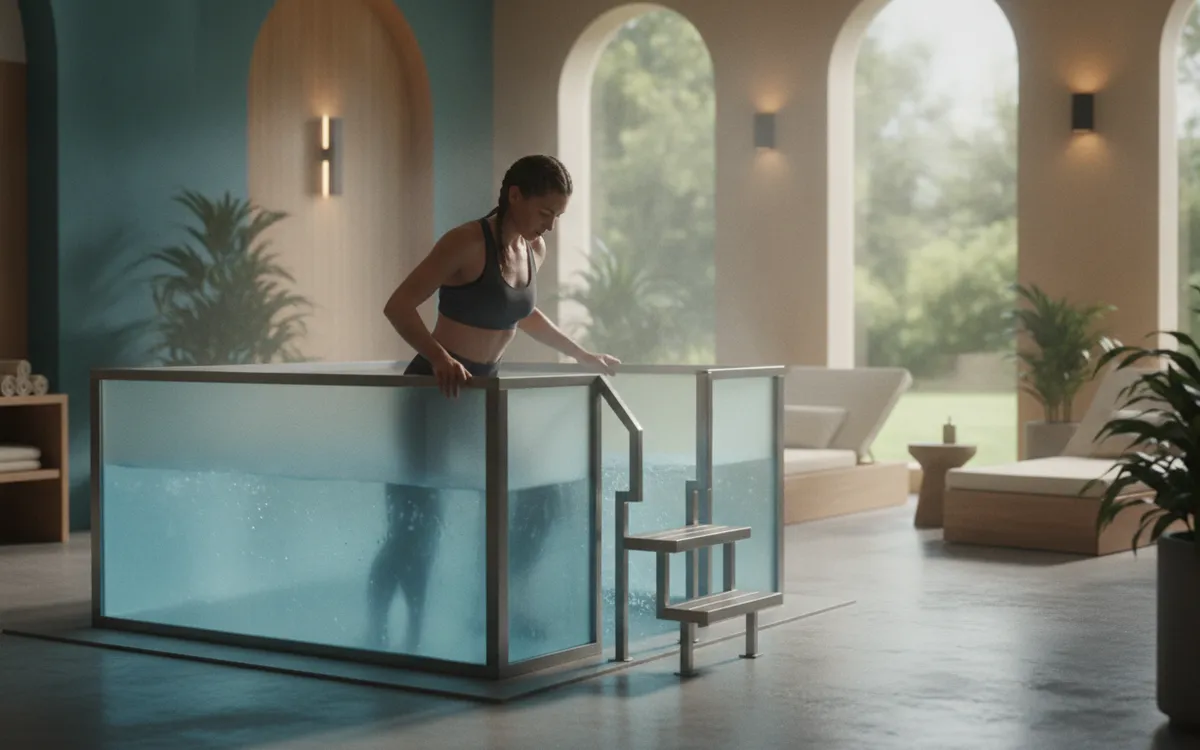
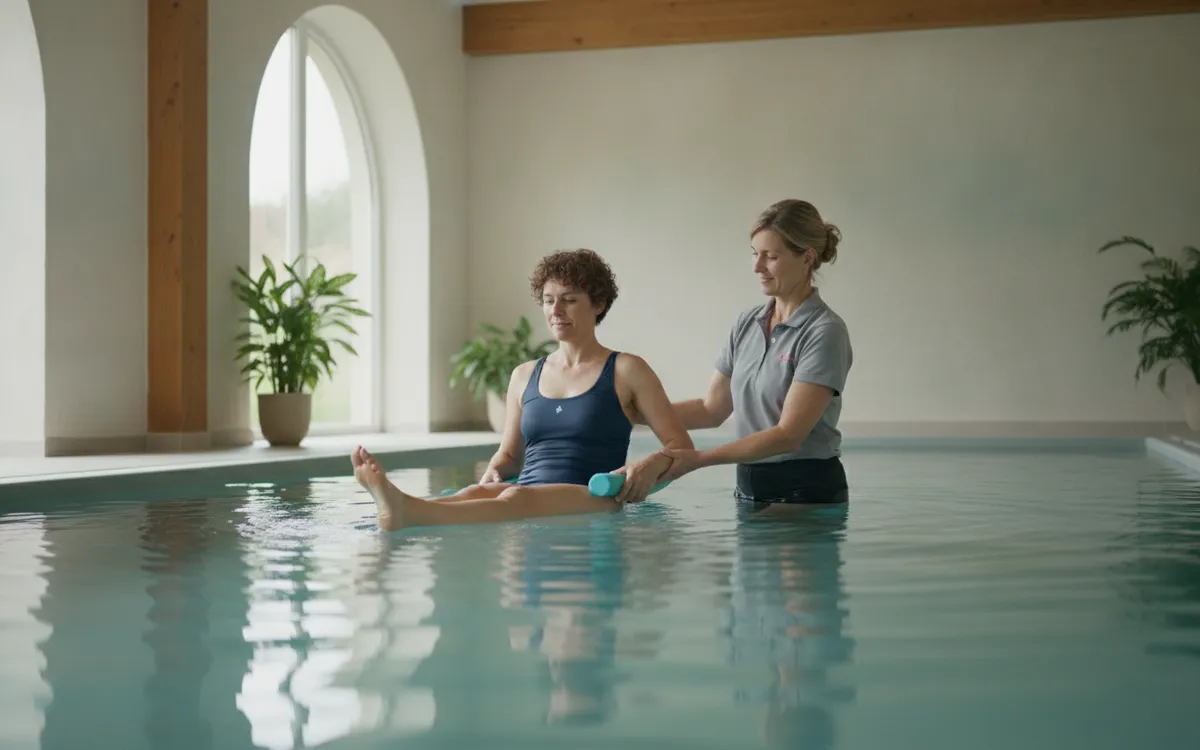
What home water therapy cannot fully replicate: the buoyancy-based exercise possible in a pool (chest-deep immersion), supervised rehabilitation programmes, and the social benefits of group aquatic classes. For these, facility-based hydrotherapy is needed. But for daily maintenance, pain management, and wellness, home therapy is remarkably effective.
Assessing Your Home Water Therapy Resources
Take stock of what you already have:
| Resource | Therapy Potential | Best For |
|---|---|---|
| Standard bathtub | High | Full-body warm soaks, contrast therapy, seated exercises, relaxation |
| Shower | Moderate | Targeted warm/cold application, standing exercises, circulation |
| Deep bucket or basin | Moderate | Foot/ankle therapy, hand therapy, contrast immersion |
| Hot water bottle | Low-moderate | Targeted warm application to specific body areas |
| Hydrotherapy tub/jacuzzi | Very high | Jetted massage, full immersion, temperature control |
| Inflatable pool | Moderate-high | Seated exercises, full immersion (summer months) |
For those considering equipment upgrades, our affordable equipment guide, tub guide, and equipment selection guide review options at every price point.
Building Your Weekly Routine
An effective home hydrotherapy routine does not require long daily sessions. Consistency matters more than duration. Here is a framework you can adapt to your needs and schedule:
The Essential Weekly Framework
| Day | Morning (5-10 min) | Evening (15-30 min) |
|---|---|---|
| Monday | Contrast shower (circulation) | Warm bath with gentle stretching |
| Tuesday | Warm shower with neck focus | Foot soak + ankle exercises |
| Wednesday | Contrast shower | Full warm bath (relaxation focus) |
| Thursday | Warm shower with shoulder focus | Hand therapy in warm basin |
| Friday | Contrast shower | Warm bath with Epsom salts |
| Saturday | Rest or gentle warm shower | Extended warm bath (30 min, relaxation) |
| Sunday | Rest | Contrast therapy or gentle warm bath |
Morning Contrast Shower Protocol (5-7 Minutes)
This is the simplest, most time-efficient home hydrotherapy technique — and one of the most effective for energy, circulation, and immune function.
- Begin with your normal warm shower for 2-3 minutes
- Turn the water to cold (as cold as tolerable) for 30 seconds
- Return to warm for 1 minute
- Cold again for 30 seconds
- Warm for 1 minute
- Final cold burst for 30-60 seconds
- End on cold for energy, or warm for relaxation
Our contrast therapy guide covers the full science behind this approach. Start conservatively — even a 15-second cold burst provides benefits — and gradually increase cold exposure as your tolerance develops.
Evening Warm Bath Protocol (15-25 Minutes)
Our detailed bath therapy guide covers every aspect of bath-based hydrotherapy. Here is the streamlined evening protocol:
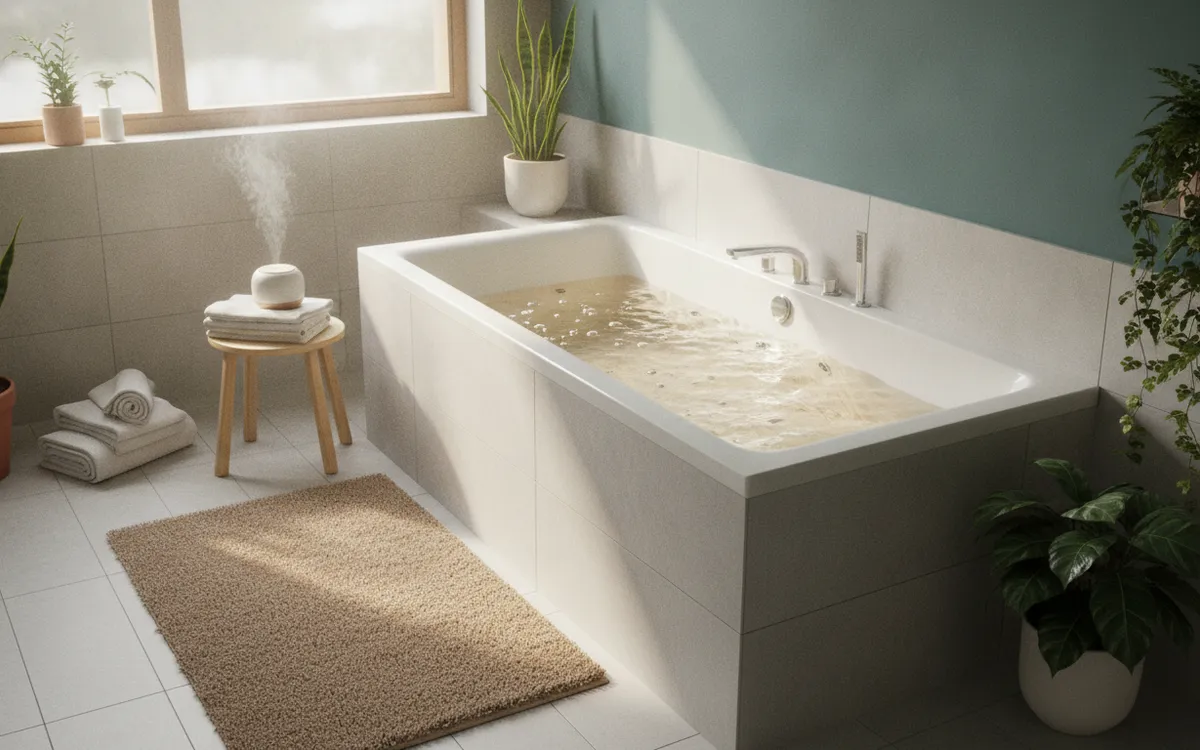
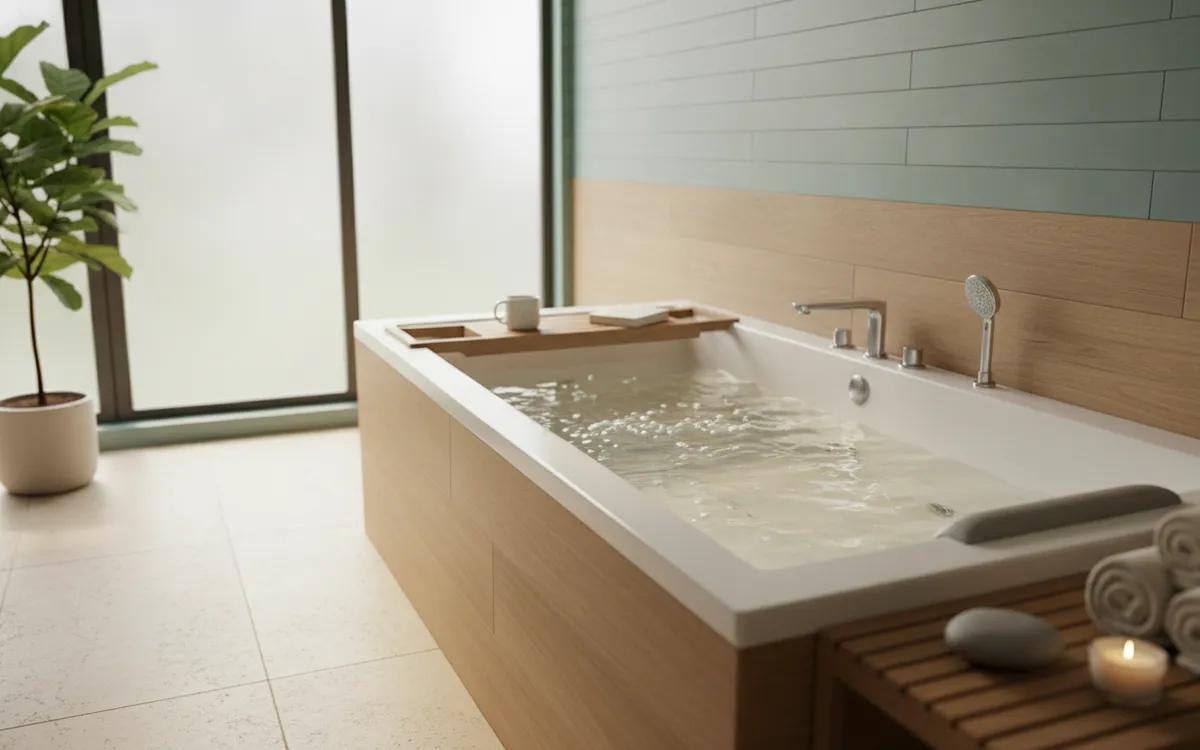
- Fill: Run bath at 36-38°C (97-100°F) — warm but not hot
- Optional additions: 1-2 cups Epsom salt (magnesium for muscles), 5-10 drops essential oil (lavender for relaxation, eucalyptus for respiratory benefits)
- Soak (first 5 minutes): Simply relax, focus on slow breathing, let the warmth penetrate muscles
- Gentle exercises (5-10 minutes): Ankle circles, knee bends, shoulder rolls, neck rotations — all performed slowly within the water
- Targeted therapy (5-10 minutes): Focus on your problem areas — hands, feet, neck, lower back — using warm water and gentle movement
- Cool down: Reduce water temperature slightly for the last 2 minutes, or finish with a brief cool shower rinse
Timing tip: Take your bath 1-2 hours before bed. Research shows this timing optimises the body's core temperature drop that signals sleep onset.
Targeted Home Water Therapy Protocols
For Hands and Wrists (Arthritis, Carpal Tunnel, Stiffness)
Fill a basin with warm water (36-38°C). Perform these exercises for 10-15 minutes:
- Open and close fists — 15 repetitions
- Finger spreads — spread fingers wide, hold 3 seconds, close — 10 reps
- Wrist circles — 10 in each direction
- Grip and release — squeeze a sponge or soft ball — 15 reps
- Thumb opposition — touch thumb to each fingertip — 5 rounds
- Marble pickup — place marbles in basin and pick up one at a time
For Feet and Ankles (Plantar Fasciitis, Swelling, Stiffness)
Fill a deep bucket or foot spa with warm water (35-37°C). Our plantar fasciitis guide covers this condition specifically.
- Ankle circles — 10 each direction
- Toe curls — grab a towel on the basin bottom with toes — 10 reps
- Calf stretch — flex foot upward, hold 15 seconds — 5 per foot
- Marble pickup with toes — 2 minutes
- Roll a tennis ball under each foot — 2 minutes per foot
For Neck and Shoulders (Tension, Stiffness, "Tech Neck")
Use a warm shower directed at the upper back and neck, or soak in a bath with water to shoulder level. Our neck pain guide covers this in detail.
- Shoulder shrugs — raise and slowly lower — 10 reps
- Neck rotation — slowly turn head left and right — 5 each side
- Neck tilts — ear toward shoulder — 5 each side
- Chin tucks — pull chin back gently — 10 reps
- Shoulder blade squeezes — squeeze shoulder blades together, hold 5 seconds — 10 reps
For Lower Back (Stiffness, Chronic Pain)
A warm bath is one of the most effective home treatments for lower back pain. Our back pain guide covers pool-based approaches, and here are bath-specific techniques:
- Pelvic tilts — lying in bath, tilt pelvis forward and back — 15 reps
- Knee-to-chest pulls — gently pull one knee toward chest, hold 15 seconds — 5 per leg
- Trunk rotation — knees bent, gently let knees fall to each side — 5 per side
- Simply lying in warm water with knees supported on a rolled towel — 10 minutes of passive decompression
Essential Home Hydrotherapy Equipment (Budget-Friendly)
You can start with nothing, but these inexpensive additions enhance your practice:
| Item | Cost | Use |
|---|---|---|
| Bath thermometer | $5-15 | Ensure consistent, safe water temperature |
| Epsom salt (bulk bag) | $10-20 | Magnesium absorption for muscles and sleep |
| Non-slip bath mat | $10-20 | Safety for standing exercises in bath |
| Deep foot basin | $10-25 | Foot and ankle therapy, hand therapy |
| Rubber exercise ball | $5-10 | Hand strengthening in warm water |
| Electric foot spa | $30-80 | Heated, circulating foot baths with massage |
| Shower massage head | $20-50 | Targeted water pressure therapy |
| Bath pillow | $10-25 | Neck support for longer soaks |
For more advanced setups, our equipment guide covers options from basic to professional-grade home systems.
Making Your Routine Stick: Practical Tips
- Start small: Begin with just the morning contrast shower for the first week. Add the evening bath protocol in week 2. Build up gradually
- Be consistent with timing: Same time each day helps the routine become automatic
- Track your response: Note pain levels, sleep quality, and energy levels. Seeing progress motivates continuation
- Make it pleasant: Candles, music, or a podcast during evening baths transforms therapy into something you look forward to
- Adapt to your body: On high-pain days, focus on gentle warm soaks. On good days, add more active exercises
- Pair with existing habits: Contrast shower after your morning workout. Bath before your evening reading time. Foot soak while watching television
When to Seek Professional Hydrotherapy
Home water therapy complements but does not replace professional treatment when needed. Consider facility-based hydrotherapy for:
- Conditions requiring supervised exercise in deep water (post-surgical rehabilitation, severe arthritis, neurological conditions)
- Situations where buoyancy for full-body exercise is needed (weight management, serious mobility limitations)
- When home approaches are not providing sufficient relief after 4-6 weeks of consistent practice
Our comparison of hydrotherapy and physical therapy can help you decide when professional guidance is warranted. For specific conditions, our guides to arthritis, fibromyalgia, sciatica, and other conditions cover when professional aquatic therapy is recommended.
Frequently Asked Questions
How long does it take to see benefits from a home hydrotherapy routine?
Immediate benefits include pain relief, muscle relaxation, and mood improvement — often felt within the first session. Cumulative benefits like improved sleep quality typically emerge within 1-2 weeks of consistent practice. Chronic pain reduction and mobility improvements generally develop over 4-8 weeks. The key is consistency: a 15-minute bath 4-5 times per week produces better long-term results than an occasional hour-long soak.
Is a bath or shower more effective for hydrotherapy?
Baths are generally more effective because they provide full immersion — combining warmth, hydrostatic pressure, and buoyancy. However, showers have unique advantages: they allow targeted water pressure application (like a massage), they enable contrast therapy through temperature switching, and they are faster and more accessible for daily use. The ideal routine includes both: quick contrast showers in the morning for energy and circulation, and warm baths in the evening for pain relief and relaxation.
What temperature should my bath water be?
For therapeutic benefit, 36-38°C (97-100°F) is the sweet spot — warm enough to relax muscles and promote circulation, but not so hot that it stresses the cardiovascular system or dehydrates you. Use a bath thermometer rather than guessing. For specific conditions, temperatures vary: our warm water therapy guide details optimal temperatures for different therapeutic goals.
Can home hydrotherapy replace going to a physiotherapist?
For general wellness, stress reduction, and mild musculoskeletal complaints, home water therapy can be remarkably effective on its own. For specific injuries, post-surgical rehabilitation, or complex conditions, home therapy should complement — not replace — professional treatment. A physiotherapist can design a water-based home exercise programme tailored to your condition, which you then perform independently. Think of it as professional guidance for a home practice.
Is it safe to do hydrotherapy at home every day?
Yes, for most people, daily home hydrotherapy is safe. Warm baths of 15-25 minutes at 36-38°C are well-tolerated daily. Contrast showers can be performed daily without concern. The main precautions: avoid very hot water (above 40°C) for prolonged periods, stay hydrated (drink water before and after), and be careful getting in and out of the bath (use non-slip mats and grab bars). People with cardiovascular conditions, diabetes, or pregnancy should follow the specific guidelines in our risks and precautions guide.
]]>