Best Hydrotherapy Exercises for Beginners: A Simple 4-Week Water Therapy Program to Start Your Aquatic Fitness Journey
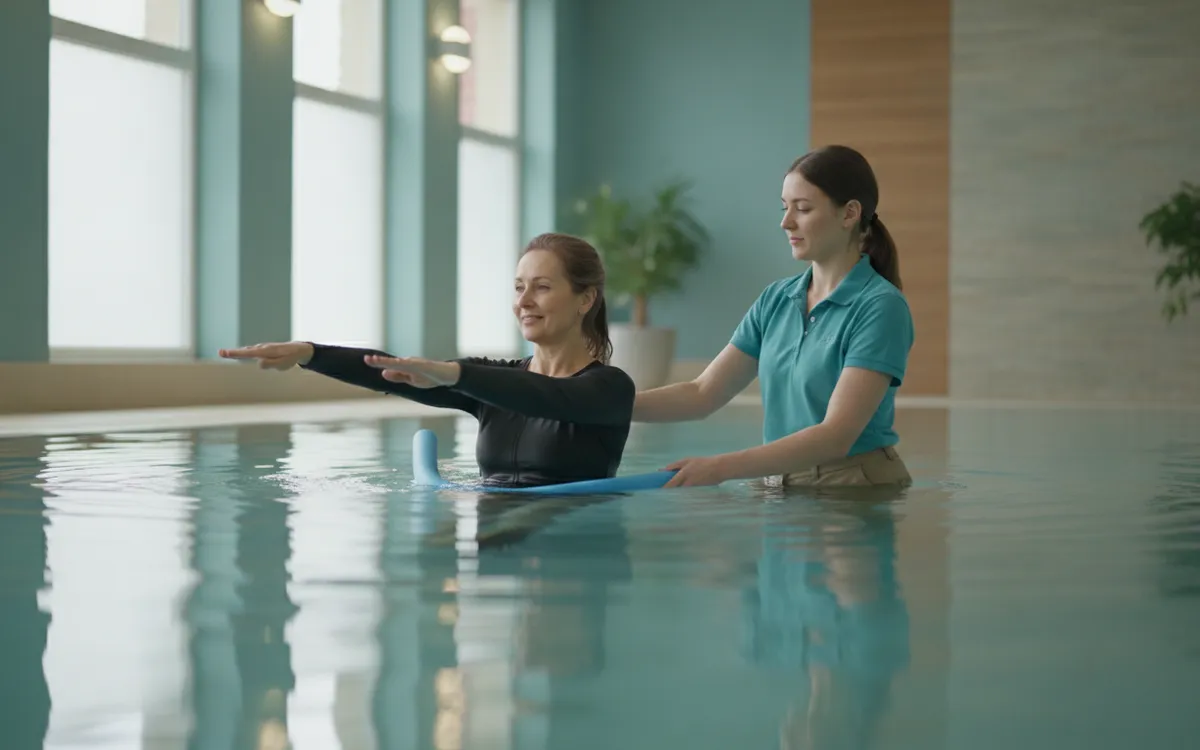
Starting Your Water Therapy Journey
If you've never tried hydrotherapy or aquatic exercise, the prospect can feel intimidating. What depth should you use? How warm should the water be? What exercises actually work? And most importantly, you don't need to be a strong swimmer (or a swimmer at all) to benefit from water-based therapy.
This guide provides a structured 4-week beginner program that progressively builds your confidence, strength, and comfort in the water. Every exercise can be performed in a standard pool, and most can be adapted for a bathtub or large basin at home. By the end of four weeks, you'll have a solid foundation to explore more advanced aquatic exercises or transition into condition-specific protocols.
For the science behind why water exercise is so effective, read the science behind hydrotherapy. For a broader overview, see what hydrotherapy is.
Before You Begin: Essential Setup
Choosing Your Water Environment
| Option | Best For | Temperature | Cost |
|---|---|---|---|
| Community warm water pool | Best overall beginner experience | 30 to 34°C (86 to 93°F) | $5 to $20/session |
| Standard lap pool | General fitness; widely available | 26 to 29°C (79 to 84°F) | $5 to $15/session |
| Bathtub at home | Hand, foot, and upper body exercises | 37 to 39°C (99 to 102°F) | Free (water cost only) |
| Home hydrotherapy pool/tub | Full-body home therapy | Adjustable | Investment in equipment |
For help selecting equipment, see our guides to home hydrotherapy pools, hydrotherapy tubs, and affordable equipment. For temperature guidance, see our pool temperature guide.
What You'll Need
- Swimsuit and towel
- Water shoes (optional but helpful for pool grip)
- Pool noodle (most pools provide these)
- Water bottle (you sweat in warm water even though you don't notice it)
- Timer or waterproof watch
Week 1: Getting Comfortable
Goal: Build water confidence; learn basic movements; understand buoyancy
Sessions: 2 to 3 times this week | Duration: 20 to 25 minutes per session
Exercise 1: Water Walking (5 minutes)
Walk forward in waist-to-chest-deep water at a comfortable pace. Focus on normal walking mechanics, heel strike, push off, arm swing. The water's resistance will naturally slow you down and challenge your muscles. Walk forward for 2 minutes, backward for 1 minute (hold the pool edge for safety if needed), and sideways for 1 minute each direction.
Exercise 2: Standing Balance (3 minutes)
Stand on one foot in waist-deep water, using the pool wall for support if needed. The water's turbulence challenges your balance while buoyancy reduces fall risk. Hold each side for 15 to 30 seconds, alternating feet. As you gain confidence, release the wall and use your arms for balance.
Exercise 3: Gentle Arm Sweeps (3 minutes)
Stand in chest-deep water. Sweep both arms forward and back through the water in slow, controlled arcs. Then sweep them out to the sides and back together. The water provides gentle resistance in all directions. Perform 10 sweeps in each direction.
Exercise 4: Marching in Place (3 minutes)
March in place in waist-deep water, lifting knees to hip height. The water provides resistance on the upward movement and assistance on the way down. Maintain an upright posture and swing arms naturally. Start slowly and find a comfortable rhythm.
Exercise 5: Wall Push-Ups (3 minutes)
Stand arm's length from the pool wall in chest-deep water. Place hands on the wall at shoulder height. Lean toward the wall (like a standing push-up), then push back. The water's buoyancy makes this easier than land push-ups while still challenging your chest, shoulders, and arms. Perform 10 to 12 repetitions, rest, repeat.
Cool-Down: Gentle Floating (3 to 5 minutes)
If comfortable, practice floating on your back with a pool noodle under your neck and knees. Focus on slow, deep breathing. If floating isn't comfortable, simply stand in the warm water and perform gentle neck rolls and shoulder shrugs.
Week 2: Building Strength
Goal: Increase resistance; add lower body exercises; extend duration
Sessions: 3 times this week | Duration: 25 to 30 minutes per session
Perform all Week 1 exercises as a warm-up (10 minutes), then add:
Exercise 6: Water Squats (4 minutes)
Stand in chest-deep water with feet shoulder-width apart. Slowly lower into a squat (as deep as comfortable, aim for thighs parallel to the pool floor). The buoyancy supports you, making squats significantly easier than on land. Hold for 3 seconds at the bottom, then stand. Perform 10 to 12 repetitions, rest 30 seconds, repeat 2 sets.
Exercise 7: Leg Swings (4 minutes)
Hold the pool wall with one hand. Swing the opposite leg forward and backward through the water in a controlled pendulum motion. The water provides resistance in both directions. Perform 10 swings per leg, then switch to side-to-side swings. This builds hip and core strength while improving balance.
Exercise 8: Bicep Curls with Water Resistance (4 minutes)
Stand in chest-deep water with arms at your sides, palms facing forward. Curl both hands toward your shoulders against the water's resistance, then push them back down. To increase resistance, hold your hands flat (like paddles) or use small aquatic dumbbells. Perform 12 to 15 repetitions, 2 sets.
Exercise 9: Noodle Balance (4 minutes)
Sit on a pool noodle like a horse (one end in front, one behind). Balance using your core muscles while the noodle tries to float upward. This is an excellent core stability challenge that's also fun. Try to maintain your balance for 30 seconds, rest, and repeat 4 to 5 times.
Week 3: Adding Intensity
Goal: Increase pace; add cardiovascular elements; introduce interval training
Sessions: 3 times this week | Duration: 30 to 35 minutes per session
Warm up with 10 minutes of Week 1 to 2 exercises, then add:
Exercise 10: Water Jogging Intervals (5 minutes)
Alternate between water walking (1 minute) and water jogging (30 seconds). Water jogging means a faster pace with higher knee lift and more vigorous arm movements. The water's resistance makes this significantly more challenging than it looks. Repeat 4 cycles.
Exercise 11: Cross-Country Ski Motion (4 minutes)
In waist-deep water, alternate stepping one foot forward and one back in a cross-country skiing motion while swinging opposite arms. This full-body movement challenges coordination and cardiovascular fitness. Maintain a steady rhythm for 2 minutes, rest 30 seconds, repeat.
Exercise 12: Trunk Rotations (3 minutes)
Stand in chest-deep water with arms extended forward at the surface. Rotate your trunk to the right, sweeping your arms through the water, then to the left. The water resists the rotation, strengthening your obliques and deep core muscles. Perform 10 rotations to each side.
Exercise 13: Jumping Jacks (3 minutes)
Perform jumping jacks in chest-deep water. The water provides significant resistance to both the outward and inward movements while buoyancy absorbs the impact. If jumping is uncomfortable, step one foot out at a time instead. Perform 15 to 20 repetitions, rest, repeat.
Week 4: Complete Workout
Goal: Perform a full 35 to 40 minute session; maintain proper form throughout; establish your ongoing routine
Sessions: 3 times this week | Duration: 35 to 40 minutes per session
Combine your favourite exercises from Weeks 1 to 3 into a complete workout:
| Phase | Duration | Exercises |
|---|---|---|
| Warm-up | 5 minutes | Water walking, gentle arm sweeps, marching |
| Strength | 12 minutes | Water squats, leg swings, wall push-ups, bicep curls, trunk rotations |
| Cardiovascular | 10 minutes | Water jogging intervals, cross-country ski, jumping jacks |
| Balance and Core | 5 minutes | Single-leg balance, noodle balance, standing balance reaches |
| Cool-down | 5 minutes | Gentle floating, deep breathing, slow walking |
What's Next After 4 Weeks?
After completing this beginner program, you have a solid foundation to:
- Continue general aquatic fitness: Our comprehensive exercises guide offers advanced movements
- Start a condition-specific program: Explore guides for back pain, arthritis, fibromyalgia, or other conditions
- Try aqua yoga: Our aqua yoga guide combines flexibility and mindfulness
- Build a home routine: See our guide on building a home hydrotherapy routine
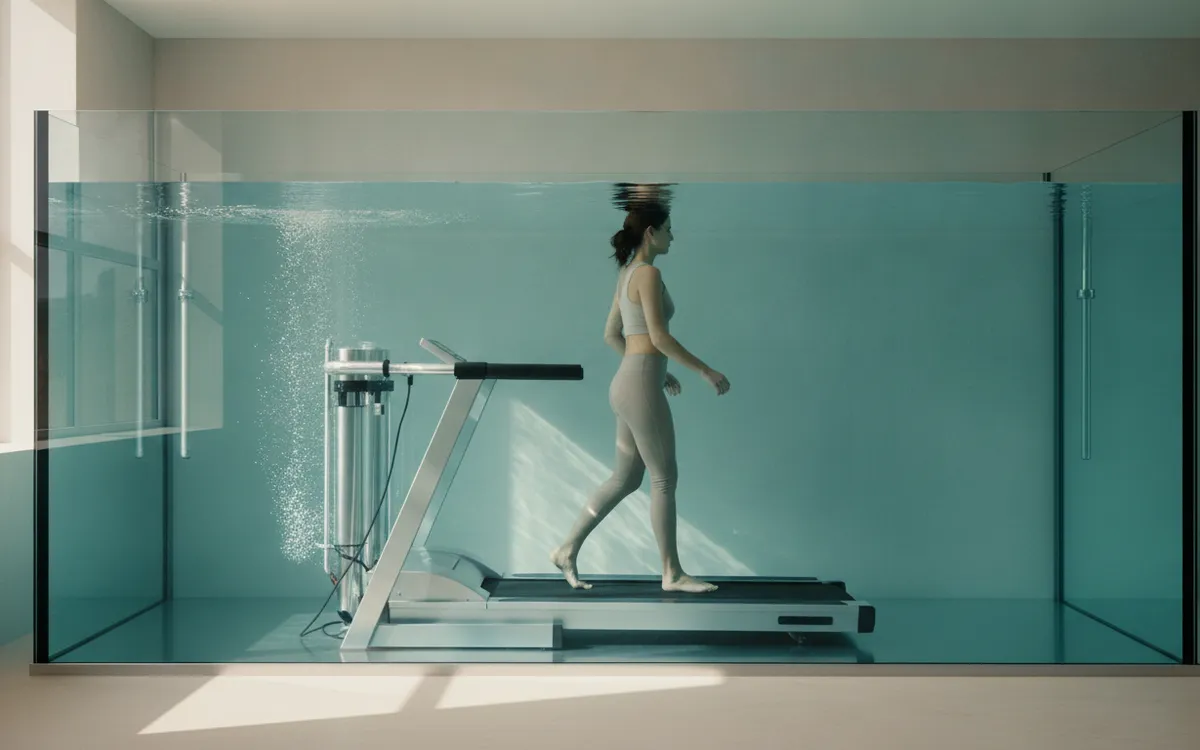
- Explore advanced modalities: Consider contrast therapy or underwater treadmill sessions
- Pursue weight loss goals: Our weight loss guide provides structured programs
Safety Tips for Water Exercise Beginners
- Stay hydrated: Drink water before, during, and after pool exercise, dehydration is common in warm water
- Start shallow: Begin exercises in waist-deep water and progress to chest-deep as confidence grows
- Use the wall: Keep the pool wall within arm's reach for all exercises until you're confident
- Listen to your body: Pain is a signal to modify or stop. Muscle fatigue is normal; joint pain is not
- Shower before and after: Pre-swim showers are pool etiquette; post-swim showers remove chlorine
- Know your limits: If you're managing a health condition, consult your doctor before starting. See our contraindications guide
Frequently Asked Questions
Do I need to know how to swim to do hydrotherapy exercises?
No. The vast majority of hydrotherapy exercises are performed standing in waist-to-chest-deep water where you can always touch the bottom. Swimming ability is not required. The pool wall is always available for support, and pool noodles provide additional buoyancy if needed. Many people who are not swimmers find that aquatic exercise actually helps them become more comfortable in water over time.
How many times a week should a beginner do water exercises?
Start with 2 to 3 sessions per week, allowing at least one rest day between sessions. This gives your muscles time to recover and adapt. After 4 weeks, you can increase to 3 to 4 sessions per week if desired. Consistency is more important than frequency, two reliable weekly sessions produce better results than sporadic daily sessions.
Will I get a good workout in the water?
Absolutely. Water provides 12 to 15 times more resistance than air, meaning every movement is a strength exercise. Studies show that water exercise can burn 400 to 700 calories per hour, improve cardiovascular fitness, build lean muscle, and enhance flexibility, all with significantly less joint stress than land-based exercise. Many people are surprised by how challenging (and effective) water exercise is.
What should I wear for pool exercises?
A standard swimsuit is perfect. For extra comfort, consider water shoes (provide grip on pool floors), aqua socks (protect feet), and swim goggles (if you plan to put your face in the water). Avoid cotton clothing in the pool as it becomes heavy and restrictive when wet. Some people wear rash guards for sun protection or modesty.
Is warm water or cool water better for exercise?
For beginners and therapeutic exercise, warm water (30 to 34°C / 86 to 93°F) is ideal, it relaxes muscles, reduces pain, and feels comfortable. For vigorous cardiovascular exercise, slightly cooler water (27 to 30°C / 81 to 86°F) prevents overheating. Most therapy pools are maintained at 31 to 34°C, which is a good all-round temperature. For detailed guidance, see our temperature guide.